• Honoring Hispanic Heritage Month September 15 – October 15
    By GED Author
    Information and statistics provided by Hispanic Star Dataset

    Latinos are a dynamic force in the U.S. workforce, with significant contributions and an impressive growth trajectory. As of now, 29 million Latinos are in the U.S. workforce, underscoring their crucial role in the nation’s economic landscape. This demographic is expected to become even more influential in the coming years. Projections indicate that by 2030, one out of every five U.S. workers will be Hispanic. This shift will substantially change the workforce composition and influence the future direction of labor market trends.

    Latinos have one of the highest labor force participation rates among racial and ethnic groups, currently standing at 65.6%. This high level of engagement reflects their integral role in various industries and sectors. The anticipated growth is further highlighted by the fact that 78% of the net new workers expected between 2020 and 2030 are projected to be Latino, emphasizing their pivotal role in future workforce expansion.

    Latinos are an increasingly significant demographic in the U.S. education system, and their presence and experiences reflect broader trends and challenges within the sector. As Latino student numbers continue to rise, understanding their impact and addressing their needs becomes ever more critical.

    Latinos make up 27% of the nation’s 50.6 million public school students, marking a substantial and growing presence in American classrooms. This rise is accompanied by a notable increase in English learners, whose numbers grew by 33% between the 2000–01 and 2017–18 school years. This growth highlights the need for tailored educational resources and support to accommodate diverse linguistic and cultural backgrounds.

    Latinos represent 21% of the 16.6 million students in higher education enrolled in undergraduate programs. This percentage highlights their significant contribution to the academic landscape, with many of these students navigating the complexities of college life as first-generation students. 70% of Latino college students are the first in their families to pursue higher education, reflecting both their ambition and the challenges they face in accessing and succeeding in college.

    Despite their growing numbers and achievements, Latino students encounter several obstacles. For instance, 35% of LGBTQ Latinx students report feeling unsafe at school, which often leads to higher absenteeism. This safety concern is a critical issue that schools must address to create an inclusive and supportive environment for all students.

    The increasing representation of Latinos in education presents both opportunities and challenges. The rise in Latino students in public schools and colleges is a testament to the community’s commitment to education and upward mobility. However, it also necessitates a concerted effort to address the specific needs of these students, including support for English learners, mental health resources, and programs to assist first-generation college students.
  • Celebrating the First National GED Day, September 16
    By GED Author

    National GED Day, observed on September 16, is a significant occasion dedicated to recognizing the achievements of those who have earned their GED credential and celebrates the importance of educational opportunities for all. This day highlighted the role of the GED in providing a pathway to further education and improved career prospects for individuals who did not complete their traditional high school education.

    For many, earning a GED is a crucial step toward personal and professional advancement. It opens doors to higher education, vocational training, and better employment opportunities. According to the American Council on Education, those with a GED are statistically more likely to pursue higher education and have better earning potential than those without any high school credential.

    National GED Day is a time to celebrate the hard work and determination of GED graduates. It’s also an opportunity to raise awareness about the importance of adult education and the resources available to those seeking to earn their diploma. Events and activities across the country often include:

    Across the country, multiple organizations joined in the celebration of National GED Day. Some of the highlights included:

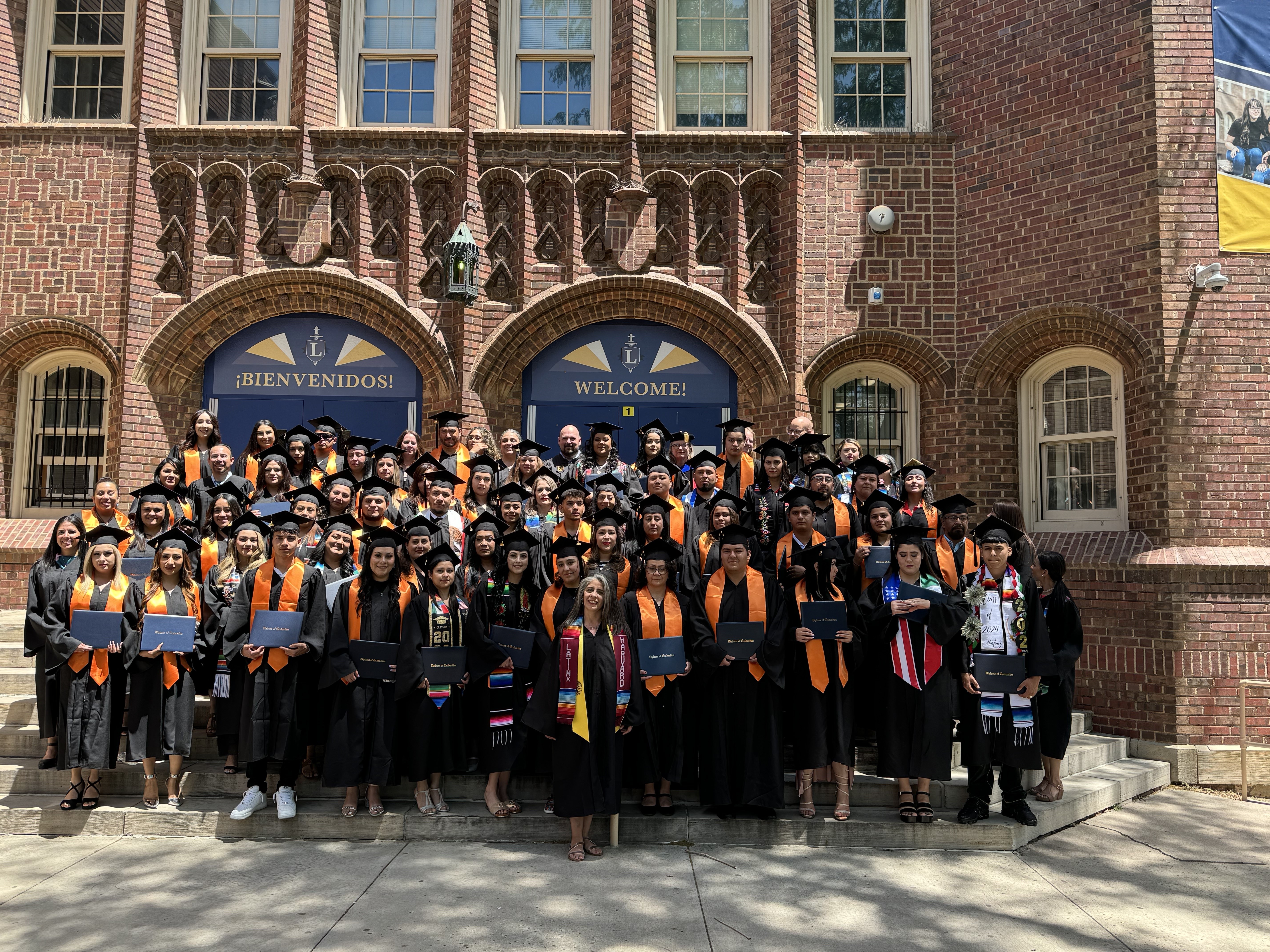
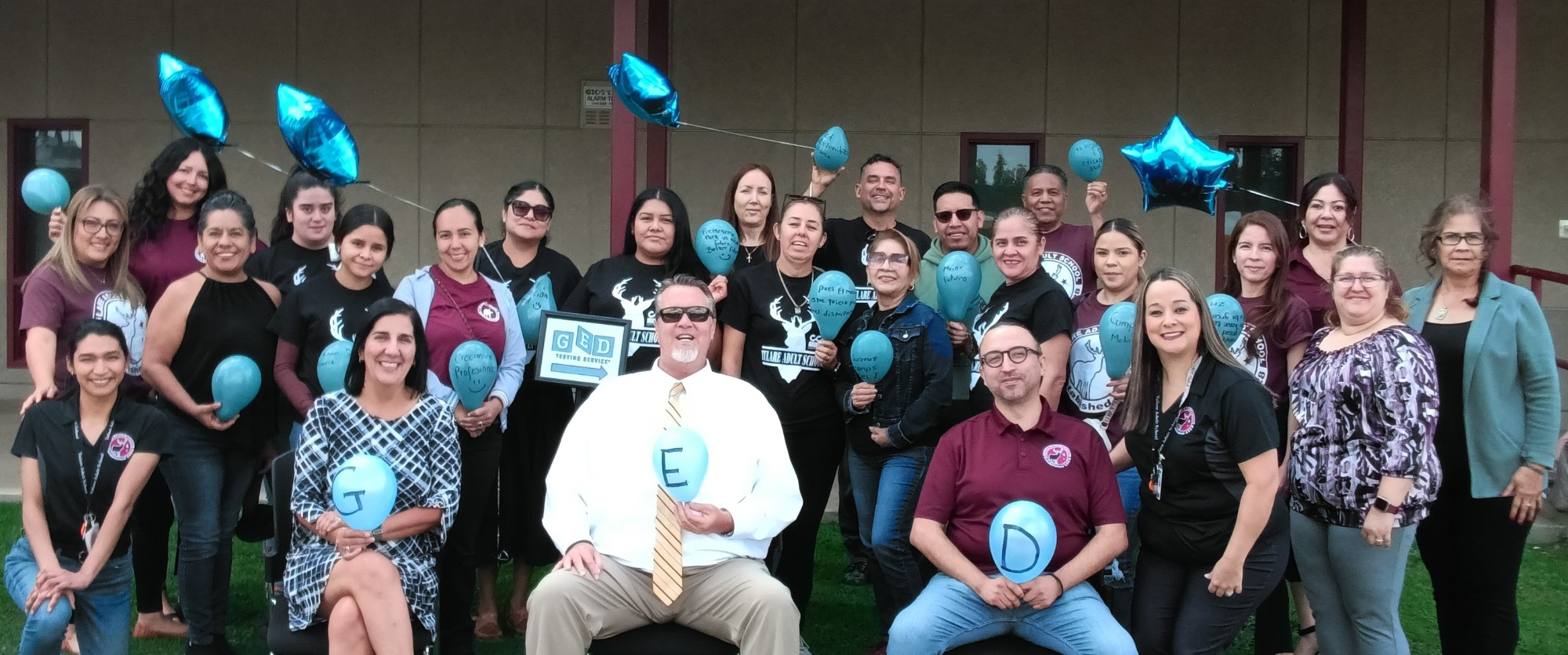
    • GED Program celebration at Tulare Adult School in California (pictured above) including Superintendent Lucy VanScyoc, Director of Adult Education Rand Clem, and GED instructors and proctors Jesus Martinez, Daniella Martinez, Tiffany Sarmiento, and GED students,
    • Honorable Muriel Bowser, Mayor of Washington D.C., proclaimed the importance of National GED Day and education in the community’s well-being,
    • Morehouse State University in Kentucky hosting an open house,
    • a radio interview at the NPR covering Indian River State College GED program
    • State Relationship Manager Lisa Pool-Osorio’s GED update presentation at an open house at the Nevada Department of Education,
    • The Mississippi Community College Board State Director of Adult Education Beth Little and her staff proclaimed the importance of the GED in the Magnolia State,
    • State Relationship Manager Adora Beard attended the kickoff event for their 4th & Goal at Anne Arundel Community College in Arnold, Maryland.

    Lastly, in celebration of National GED Day, a special episode of our Education UnplugGED podcast episode featured Vicki Greene, President of GED Testing Service, and Ted Mitchell, President of the American Council on Education.

  • A Summary of 2024 GED® Conference: We’re Not Done Yet!
    By GED Author

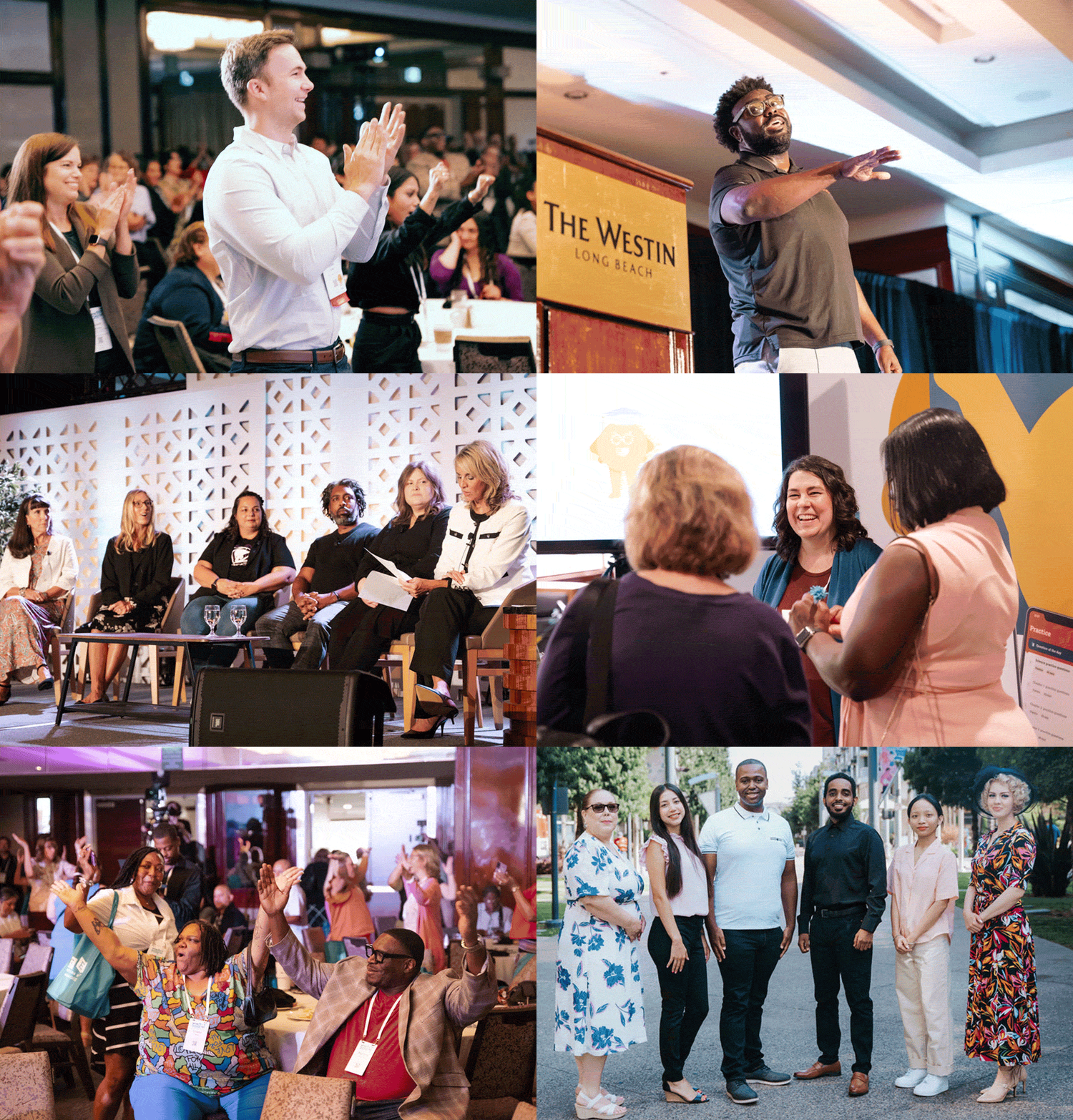
    Here is a summary of the 2024 GED Conference for the educators and program administrators who were not able to join us. The GED Conference, held in Long Beach, California, from July 24 to 26, was an inspirational event centered around the theme “We Are Not Done Yet!” The conference, which brought together close to 600 educators, administrators, and industry leaders from 24 states, provides a space for thought leaders to work together in shaping the future of adult education.

    This year’s key highlights included speaker Marcus Bullock, a renowned entrepreneur and justice reform advocate, and GED President Vicki Greene, who set a moving tone for the event.

    Attendees had access to 54 interactive sessions, including 10 new sessions, covering topics such as using AI tools in education, advanced teaching techniques in algebra, and applying GED Analytics for different levels of instruction. Sessions focused on correctional education and Integrated Education and Training programs also took place.

    The annual meeting also featured a preview of the GED mobile app, GED & Me™, designed to support learners with on-the-go access to resources. Other offerings also included a Train the Trainer session, information GED® analytics, multiple sessions offered in Spanish, and awards for the Administrator of the Year, Mike Farma and celebrations of awards for GED® graduates. Additionally, the exhibition hall provided hands-on experiences with the latest educational tools and technologies.

    Overall, the conference was a platform for professionals to gain fresh insights, celebrate the successes of their students, share best practices, and contribute to the ongoing evolution of GED programs, leaving everyone with a sense of pride and motivation.

  • Inspiring success stories from Denver Public Schools’ Community Hubs
    By GED Author

    Read the heart-warming story of 62 recent GED graduates who are parents of Denver Public Schools students, studying side by side.

    Launched in 2022 by Denver Public School Superintendent Alex Marrero, the community hubs take a two-generation approach to improving students’ lives by helping children and parents with learning opportunities such as the GED and other services, from financial counseling to mobile medical appointments. Denver Public School Community Hubs address a holistic approach to student learning through programs and services that support families’ social, emotional, physical, academic, and basic needs. Denver Public Schools works with each identified community to build out the services most aligned to their needs.

    Community Hubs is dedicated to promoting equity and inclusion in their communities. These Community Hubs celebrate diversity while addressing the unique needs of their community members. To ensure inclusivity, the staff work diligently to remove barriers and make their programs accessible. They provide physical accessibility, language accommodations, and support for diverse learning styles and abilities. They value representation and empower individuals from marginalized groups to participate and lead in their programs. Everyone in the community should have a voice and contribute to their Community Hubs’ success.

    The Community Hubs also have a training-to-employment pipeline designed to increase diversity across Denver Public Schools and better reflect the city’s demographic makeup by providing skills training and resume-building classes.

    The message to DPS parents is: “We want you here. That’s the magic of the community hubs,” says Community Hub Executive Director Esmeralda de la Oliva. The magic is also in the dedication of the staff. From GED instructor Mayra Laguna, who customized materials for her students, to ESL instructors to all Community Hubs staff members who are dedicated to their students’ academic achievement and overall well-being. “This is a work of love and your heart has to be in the right place. Our families deserve the best.” said De la Oliva.

    On a recent Wednesday morning, adult Spanish-speaking students in a GED class practiced math and celebrated with pink-frosted cupcakes for a classmate who had passed their tests. Since 2022 the six Denver area Community Hubs have provided GED classes to hundreds of students from various countries. The learners’ ages ranged from 28 to 45. The graduating class of 62 was the largest to date.

  • President’s Corner: Announcing the First Official National GED Day on September 16
    By GED Author

    Let’s recognize GED graduates, appreciate adult educators and kick off National Adult Education and Family Literacy Week!

    I have always thought of the GED as so much more than a test – it’s an entire program that equips learners for success in education and in life, building knowledge and confidence for a brighter, more equitable future for all. This is one of the reasons why we are excited to announce the first annual National GED Day to be celebrated on September 16th. We are proud to raise awareness for the GED and acknowledge the determination and resilience of GED learners, the commitment of educators, and the support of all those who motivate students to succeed.

  • Spotlight on California: California Council for Adult Education: Supporting Lifelong Learning
    By GED Author

    Innovative programs from the Voice of Adult Education in the largest state in the continental USA

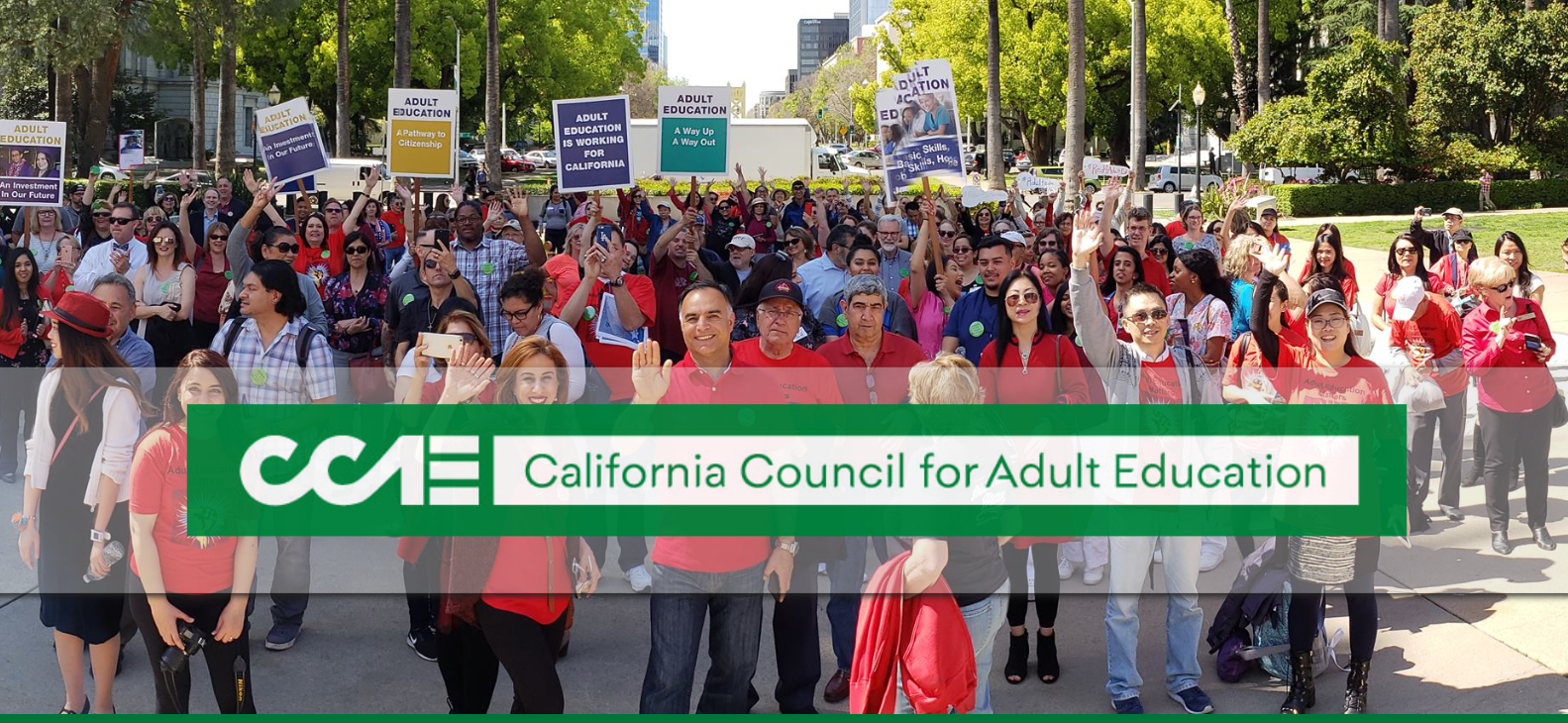
    The California Council for Adult Education (CCAE) is California’s largest professional organization serving adult education. CCAE serves all levels of the adult education community, including teachers, classified staff, administrators, and learners. For this reason, CCAE plays a pivotal role in enhancing adult education across the state. Established to advocate for adult learners, CCAE provides high-quality education opportunities that empower individuals to achieve their personal and professional goals.

    One of the primary objectives of the CCAE is to promote policies that support funding and resources for adult education programs. The council’s inclusive and collaborative approach, working with various stakeholders, including educators, policymakers, and community organizations, ensures that adult learners have access to the necessary tools for success. This approach fosters a sense of community and shared responsibility, making CCAE a true partner in the adult education community.

    CCAE offers a range of professional development opportunities for educators, equipping them with innovative teaching strategies and resources to better meet the diverse needs of adult students. By fostering a community of practice, the council encourages collaboration and sharing best practices among educators throughout California.

    CCAE executive director Adriana Sánchez-Aldana says “at CCAE we stay true to the origins of adult education in California, dating back to 1856 in the basement of St. Mary’s Cathedral in San Francisco. The San Francisco Board of Education authorized the class to teach English to Irish, Italian, and Chinese immigrants. Adult schools have been called upon on numerous occasions to assist the state in dealing with significant social, political, and economic issues.”

    In addition to its advocacy and professional development efforts, the California Council for Adult Education (CCAE) is unwavering in its commitment to raising awareness about the transformative power of adult education. Through outreach initiatives and partnerships, CCAE seeks to inspire hope and highlight how education can transform lives, improve job prospects, and enhance community well-being.

    In essence, the CCAE stands as a vital advocate for adult education in California, ensuring that all individuals have the opportunity to learn and grow, no matter their age or background.

  • Inspiring GED Student Story: Leonardo in Downey, CA
    By GED Author

    Leonardo was awarded his GED diploma at a ceremony on April 23, 2024 at the Downey Adult School. His journey towards this accomplishment is truly remarkable as Leonardo suffered a stroke in August 2017, leaving most of his body paralyzed and unable to speak. He was no longer able to work, as his “new job” was to recover and heal. Over the next two years Leonardo worked on strengthening his mind and body with the help of the Rancho Los Amigos National Rehabilitation Center. As he continued to heal, he realized he wanted to go back to school to get his GED. At the end of 2019, he enrolled at Downey Adult School. There were many obstacles along the way including COVID and his rehabilitation.

    Leonardo is best at telling his story: “I now am enrolling at Cerritos College to continue my education in computer technology. I knew that I could not let this opportunity pass. When I was younger, I chose not to finish school and start in construction, but I now believe continuing my education is the key to my success and will only create a stronger foundation for my future.”

    Life is a journey, and sometimes the journey is not what you planned, or maybe you did not know what plan was needed. Some people may see the GED as just a piece of paper, but I know it has opened a door for me to go to Cerritos and eventually to a university. It has been a great honor to witness my fellow graduates work diligently, dedicating their time and efforts to school while also balancing life’s day-to-day obligations. For the times we may feel we are not good enough to accomplish good things in our lives, I can now say let the good times continue.”

    Leonardo also wanted to thank the entire staff at the Downey Adult School and especially his program counselor, Robert Dame. The school has served the Downey community and surrounding areas for over 70 years. It offers a variety of courses to its diverse community, including 18 different Career Technical Education options. At Downey, the entire staff’s first priority is helping their learners reach their educational, career, and personal goals. Downey Adult School is actively collaborating with Cerritos College and its newly formed consortium, Partnership for Adult Academic and Career Education (PAACE), to further enhance its educational offerings and opportunities.

  • Embracing the future of learning, where education meets innovation
    By GED Author

    In an era where education intersects seamlessly with technology, we are so proud to introduce two groundbreaking initiatives aimed at revolutionizing the learning experience: the Education Unplugged podcast and the new GED mobile app, GED & me™

    I am happy to share information about our new podcast Education UnplugGED, which I host. My podcast interviews take you on a journey to uncover the evolving landscape of education and workforce development. Through candid conversations with thought leaders, educators, and industry experts, I’ll delve into pressing topics shaping the future of learning. From innovative teaching methodologies to the impact of technology on educational outcomes, each episode offers listeners a deep dive into the challenges and opportunities facing education today.

    My conversations with guests from diverse backgrounds provide a 360-degree view of how education is adapting to meet the demands of a rapidly changing workforce. Whether you’re an educator, a student, or an industry professional, this podcast promises to inspire, inform, and provoke thought on the future of learning.

  • Sneak peek at our most innovative conference yet
    By GED Author

    Mark your calendars for an event that promises to ignite inspiration and innovation in the adult education ecosystem. From July 24-26, 2024, GED Testing Service proudly presents We Are Not Done Yet. This gathering of educators, program administrators, industry leaders, and learners alike will delve into the future of education and the continued pursuit of excellence in academic achievement and innovative partnerships and apprenticeships and other options for GED graduates.

    The theme of the conference We Are Not Done Yet captures the ongoing journey towards educational advancement, innovation, and empowerment. In a rapidly changing global landscape, the quest for knowledge and skill development never ceases. “We Are Not Done Yet” invites participants to embrace a mindset of continuous improvement and exploration, acknowledging that there are always new horizons to conquer in education.

    Highlights of the GED Conference 2024 include:

    • Keynote addresses by Marcus Bullock and GED President Vicki Greene
    • Train the Trainer session – the first in five years will be especially useful for new professionals
    • Attendees can choose from 54 interactive sessions including hot topics like:
      • ChatGPT: Transforming Classroom Instruction, Amplifying Lesson Planning, Empowering Student Learning!
      • Innovative teaching techniques such as Beyond the Basics: Teaching Algebraic Reasoning Like a Boss
      • Best practices in correctional facilities;
      • Two GED Analytics sessions for instruction for basic and power users.
      • Here is more information on all the sessions.
    • Preview the GED mobile app, GED & MeTM, now available for pre-order at the Apple App store. You can download it here.
    • Networking opportunities: Connect with peers, educators, and industry leaders to share ideas, collaborate on initiatives, and build lasting professional relationships.
    • Exhibition hall: Explore the latest advancements in educational and technological resources through our exhibition hall, featuring demonstrations and hands-on experiences.

    Whether you’re an educator looking to enhance your teaching methods, an administrator learning from your colleagues and other thought leaders, or celebrating student successes, the GED Conference 2024 offers something for everyone. Together, we will chart the course for the future of education and reaffirm our commitment to lifelong learning and changing lives through education.

    Here is more information on how you can still register.

  • Understanding the Significance of Juneteenth
    By GED Author

    President Biden signed legislation on June 19, 2021, making Juneteenth a federal holiday. The measure was passed in the House and Senate with bipartisan support. As educators, we are entrusted with the profound responsibility of teaching history in all its complexities, including moments that reflect the triumphs and challenges of our nation’s journey toward equality and justice. One such pivotal moment in American history is Juneteenth. This celebration holds deep significance for understanding the struggles and achievements of African Americans in their quest for freedom and equality.

    Juneteenth, also known as Emancipation Day or Freedom Day, commemorates June 19, 1865, when Union General Gordon Granger arrived in Galveston, Texas, to announce the end of slavery following President Abraham Lincoln’s Emancipation Proclamation, which had been issued two and a half years earlier. This delayed announcement came about because Texas was one of the last Confederate states where slavery continued to persist even after the Civil War had ended.

    Juneteenth symbolizes the liberation of African Americans from the bonds of slavery and the beginning of their journey toward full citizenship and civil rights. It marks a critical milestone in American history, illustrating both the enduring struggle for freedom and the resilience of African American communities in the face of adversity.

    For educators, Juneteenth offers a valuable opportunity to engage students in meaningful discussions about the legacy of slavery, the Civil War, Reconstruction, and the ongoing struggle for civil rights. By exploring these topics, students gain a deeper understanding of the complexities of American history and the enduring impact of slavery on our society today.

    Observing the Juneteenth holiday and integrating it into our curriculum allows us to celebrate African Americans’ achievements and contributions while addressing the historical injustices they have faced.

    Juneteenth serves as a reminder of the ongoing pursuit of equality and justice for all Americans. By recognizing and celebrating Juneteenth, we all affirm their commitment to diversity, inclusion, and the pursuit of a more just society.

    For additional information regarding Juneteenth, please see the following resources:

    Read: Opal Lee and What It Means to Be Free: The True Story of the Grandmother of Juneteenth by Alice Faye Duncan, 2022

    Watch: Henry Louis Gates Jr. on the significance and history of Juneteenth, CBS News, 2023

    Listen: Juneteenth: The Untold Story of One Man’s Love, Beyond Black History Month, 2022

  • Join us for GED Grad Day and for our new podcast this Friday!
    By GED Author

    This time of the year is so special as students celebrate the great accomplishment of graduating from educational programs that will enhance their lives and provide a brighter future. This is why GED Grad Day was created – to celebrate the accomplishments of recent GED Grads. Since many grads do not get a chance to walk across a stage, this is our way of applauding and honoring their hard work. Before COVID, Grad Day was a one-day social media event. We scheduled posts to celebrate grads, share their stories, and create social buzz throughout the day. Once COVID hit, Grad Day became Grad Week. We spread the social posts throughout the week in hopes that a week-long campaign would help drive engagement.

    In 2023 we returned to Grad Day and had our first-ever virtual commencement ceremony. We also turned Grad Day into an awareness campaign that targets prospective and current learners to use Grad Day as a target date to complete their GED. Last year, I was honored to make opening remarks and was moved by our commencement speaker Dr. Rolundus R. Rice, and by our inspiring grads, Fina, Katie, and Gabriel. At the height of the stream, we had over 700 people join us live. Since then, the recording has had over 16.5k views between Facebook and YouTube.

    This year we are delighted to again livestream the ceremony on our Facebook Graduates Community Group. Please share this information with your students so they can join us and celebrate the many GED graduates this year. You will not want to miss it – this Friday, May 17, 2024 at 1 PM ET on our Facebook Graduates Community Group. You still have time to submit a shoutout to one of your students or remind them to recognize a Class of 2024 grad on this year’s Wall of Love: https://testimonial.to/gradday-2024. The Wall of Love will be shared publicly on Grad Day.

    If GED Grad Day wasn’t exciting enough, we will also launch our new podcast, Education UnplugGED, this Friday, May 17! I will host the podcast and will be interviewing grads, educators, and companies to share success stories and spread the word about the GED credential. Our first episode features Kellie Blair Hardt – GED grad, math tutor, and GED Testing Service board member. Bookmark this page and check back on Friday for the first episode!

  • Welcome Back, Tennessee to the GED® Family!
    By GED Author

    The GED Testing Service would like to welcome the state of Tennessee back after an eight-year hiatus. The state officially offers the GED as of April 18, 2024. Since Tennessee last offered the test in 2016, we have made many innovations, such as GED Marketplace, an updated website, and a soon-to-be-launched GED Mobile App that will make it easier for learners to connect with the GED.

    A Tennessee State Administrator expressed his excitement: “We are thrilled to be back in the GED family after an 8-year break. This partnership is set to soar once again.” With the GED program, Tennessee’s adult learners can now leverage its unique benefits, joining the ranks of new GED program graduates entering the workforce and succeeding in postsecondary programs at unprecedented rates.

    Adult learners in Tennessee who are at least 18 years old can once again take the GED test in either English or Spanish. The GED offers several innovative features, including a comprehensive and mobile-friendly website, GED.com. This platform provides tools to help students navigate the GED testing process and preparation while educators can access useful free resources in both English and Spanish. We also offer additional benefits like College Ready + Credit. If students score in the 165-174 range, they have the skills needed to start college-level courses and may be exempt from placement tests and remedial courses in college. A score of 175-200 could make them eligible to earn college credit, depending on their program.

    Learners in Tennessee will also be eligible to participate in GEDWorks, a program endorsed by some of the nation’s most renowned brands, including Amazon, Jiffy Lube, Taco Bell, and KFC. This program is a comprehensive support system, offering employees and, in some cases, their family members everything they need to study for and earn a GED credential, all at no cost. The GED Testing Service offers flexible testing options for learners, in addition to learners having access to convenient testing appointments each week, giving learners complete control over which tests they take and when. To find more information on adult education programs in Tennessee, visit: Find Your Program (tn.gov)

In Session Educator Newsletter