• Preview of the 2018 GEDTS Annual Conference
    By GED Author

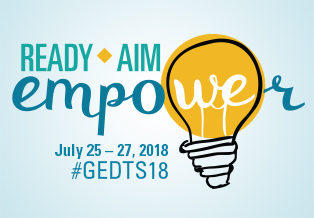
    We’re six weeks away from the 2018 GED Testing Service Annual Conference in San Diego and we can’t wait to see all of you and share the latest updates about the GED program.The pre-conference starts Tuesday, July 24th with our 2018 Train the Trainer cohort at the Westin San Diego Gaslamp. The two-day Train the Trainer Institute will consist of workshops and training led by the GED Testing Service Professional Development team to prepare educators to lead training sessions in their states.

    The official conference kicks off Wednesday, July 25th with an evening welcome reception for all conference attendees. This an opportunity for everyone to unwind from travel and join us for drinks, hors d’oeuvres and networking on the garden terrace.

    Our conference agenda starts Thursday, July 26th with an opening session featuring our keynote speaker, Erin Gruwell. Gruwell is the founder of the Freedom Writers Foundation where she teaches educators around the world how to implement her innovative classroom instruction. The New York Times bestseller she authored with her high school students inspired the 2007 movie Freedom Writers starring Oscar winner Hilary Swank.

    Our morning session is followed by a full day of workshops and presentations focused on a number of topics including: accommodations, corrections, GED test administration, adult education program marketing strategies, behavioral science research and student success, digital badging and teaching tips for all the GED test subjects.

    The lineup on Friday, July 27th will include additional presentations and workshops covering the GED test subjects and other topics including: using GED analytics and data to improve program outcomes, updates coming to the GED test and how to use the GEDPrep Connect tool and other resources to benefit your classroom.

    In your down time we encourage you to explore the many attractions San Diego has to offer. Here’s a list of top tourist recommendations in historic Gaslamp Quarter and the surrounding city.

    The official agenda will be released in the coming weeks and will be available here. If you haven’t registered for the conference—hurry and reserve your spot before it’s sold out!

    See you in San Diego!

  • Marty’s Corner: Updates Coming to the GED Test
    By GED Author

    We’re now in the fifth year of the “new” GED® test. What a long way we have come since we first introduced the idea back in 2009 of a new test edition aligned with college and career readiness content! Since 2014, we’ve continued to enhance the GED program, introducing many new features to our MyGED portal, new products to help students prepare, and our GED College Ready and College Ready+Credit performance designations to help students take advantage of postsecondary education opportunities, just to name a few.

    Although our test content and item types will remain unchanged in 2019, we will be enhancing the format of the Reasoning Through Language Arts (RLA) Extended Response (ER) item next year. The format change is something you will hear more detail about in the coming months (and at our GEDTS Annual Conference in July), and it is based on research with students that we have conducted over the past several years. This particular research has focused on what format changes we might consider making to the ER item that would provide clearer instructions and make it easier for students to respond to the item. As a result, we’ll be introducing some format changes that we think both teachers and students will find helpful – here’s a brief summary of them:

    • Enlarging the ER response box. Since we launched the test, the response box for the ER has always been visually small, with most of the screen “real estate” taken up by the stimulus material on the left hand side of the screen, and the prompt itself on the top right-hand side of the screen. Even though we’ve always stressed the important of a response of 300-500 words, the small response box has given a strong visual cue that has subliminally encouraged students to write shorter, not longer, responses. Next year, we’ll expand the response space to take up about half of the total screen space – the entire right-hand half of the screen. In our research, students that had this format wrote significantly longer and better responses than students with the current small response box format.
    • Enhancing the instructions. In the current ER format, the instructions are located in two different places – some of the instructions are part of the prompt on the right-hand side of the screen, but the rest of the instructions are in an exhibit called “Answer Guidelines” that students need to click on separately to view. Our research has shown that very few students actually click on the Answer Guidelines, and as a result, their responses often don’t meet the expectations we have for performance. In 2019, we will get rid of the answer guidelines and place all of the instructions on the left-hand side of the screen in a more clearly formatted presentation, that will help students understand how to best plan, write, and edit their response.
    • Removing the tabs from the stimulus material. When we first introduced our new test, our usability research showed that students had a great deal of difficulty with scrolling up and down to see the reading material that accompanies the ER item. Because of this, we distributed the readings across several “tabs” on the left-hand side of the screen in order to minimize scrolling. However, our students’ use of technology has greatly increased over the past several years, and our current research has found that today’s examinees are more comfortable with scrolling (possibly due to the increased use of smartphones in which scrolling is a common activity). In 2019 our reformatting will present all of the instructions on an initial tab, but the entire reading passage or passages will be contained on a second tab that students will scroll up and down to read. Our studies have shown that students not only liked the scrolling format better, but the revised format also made it easier for them to locate specific evidence or details in the passage as they develop their argument in their response to the item.

    This is just a brief overview of the changes, and we’ll provide you with examples of how the screens will look later this year as we get closer to implementation. It’s important to remember that these are only formatting changes, and the none of the requirements have changed, so teachers should continue to do the same type of instruction as has been in place. Watch this column for more details!

    –Martin Kehe, Vice President of Assessment Services for GED Testing Service

  • Another Successful Year Celebrating GED Graduates
    By GED Author

    Thanks to all of you for making the third annual GED Grad Day celebration a huge success!This year’s virtual event was held on May 16th with GED graduates, current students, adult educators and friends and family members of grads, celebrating the endless possibilities that come with a GED credential.

    Many of you shared photos on Facebook, Twitter and Instagram with a message for graduates and current students using the “Start” poster. Adult education centers and prep programs had a great presence this year with 75 of you sharing photos with the “Start” poster on our event page.

    We had 7,743 RSVPs on the GED Grad Day Facebook event page and almost 1,000 posts on our event and company pages!

    On Twitter and Instagram we had 254 mentions of GED Grad Day through the hashtags #GEDGradDay, #GED, #timetostart and #adultedu.

    Thank you for sharing your inspirational stories and encouraging advice during this year’s event.

    We look forward to continuing the celebration for years to come!

    Here are some photos from this year’s event:

  • Study Tools You Can Use to Help Your Students
    By GED Author

    The list of tools students can use to prepare for the GED test subjects continues to grow and we’re here to help you determine what new study tools, created by GED Testing Service and partners, may be best for your students and classroom.

    GED Flash for Individuals™

    Details: Online, interactive tool that functions similar to traditional flashcards, giving users the option to test their knowledge of GED test subjects with instant feedback. It offers thousands of practice questions in each of the four GED test subjects, and it was created to be easily used on students’ mobile devices.
    Target test subjects: All (Math, Science, RLA, Social Studies)
    Benefits: Provides instant feedback on which questions students got right or wrong, giving the information they need to develop study plans and identify the skills they need to improve to pass the test. Questions are randomized and students have access to more than 6,000 practice items.
    Cost: Available in a 30-day subscription per subject, subscriptions can be renewed.
    Special promotion: Now through July 15, students can purchase access to GED Flash for $3 off per 30-day subscription of individual subjects using the promo code SUMMERFLASH.
    How to buy: Students can purchase subscriptions to GED Flash through their GED.com accounts

    GED Flash for Organizations™

    Details: Similar to the GED Flash for Individuals product. Allows programs and instructors access to the same questions and answers available to individual students, with the addition of tracking and interpretive tools.
    Target test subjects: All (Math, Science, RLA, Social Studies)
    Benefits: Features include reports that show students’ time on task; data related to individual, class and organizational progress; the ability to assign content areas based upon individual or class needs and administrative dashboards that provide quick and easy access to information and tools. Educators can assign multiple students to purchased “seats” as long as students are not using the product at the same time.
    Cost: Cost varies according to number of seats purchased
    Special promotion: Now through August 31st educators can purchase GED Flash “seats” for 14 months at the 12-month price and get GED Ready practice tests for $2 each per GED Flash “seat.”
    How to buy: Adult education and GED prep programs can purchase by contacting their state relationship manager or Aztec Software.

    GED Live

    Details: Live teacher-led, interactive learning and GED preparation for students studying for the GED test.
    Target test subjects: All (Math, Science, RLA, Social Studies)
    Benefits: Offers students convenient access to a live instructor through a computer, tablet or smartphone. Adult education programs can use it to incorporate online instruction into their curriculums. This is also helpful for independent learners, working adults or adults in more rural communities.
    Cost: $59 each for 45-day subscription to individual Math or RLA classes. $129 for 90-day access to Math, RLA, Science and Social Studies classes. Program subscriptions are also available with 10 or 20-seat options.
    Special promotion: GED “Start to Finish” bundle includes GED Live classes for 90 days for all four subjects, four GED Ready practice tests and a Pre-Paid Voucher for all 4 subject areas of the GED Test. Price varies and can be found here.
    How to buy: Students can purchase GED Live access through the GED Marketplace.

  • Join our 2018 Train the Trainer Cohort
    By GED Author

    Still thinking about whether or not to join Cohort 3 of Train the Trainer at the Annual Conference in San Diego? Are you interested in making a difference—not only in your program for your students—but also in your state? Looking for your next professional achievement that contributes to student success? If you’ve been considering any of these questions, then Train the Trainer is for you!

    Did you know that:

    • Our “veteran” trainers (Cohorts 1 and 2) come from 18 states from coast to coast.
    • More than half of them have provided face-to-face professional development within their states.
    • On average, our veteran trainers provided an average of three to five professional development sessions for their colleagues during the last year.
    • Looking across selected states, our trainers have reached more than 1,000 instructors in the last year alone.

    What to do next: If you’re interested, you will need to register for the GED Testing Service Annual Conference and selectTrain the Trainer’ as your Registration Type. Plan to arrive in San Diego by Monday evening, July 23rd. Training for Cohort 3 will kick off Tuesday morning July 24th. Already registered for the Conference but not for Train the Trainer? Contact Mimi Abdulkadir at mimi.abdulkadir@ged.com to update your registration. Participation in Train the Trainer costs $50 in addition to the regular conference fee.

    Please note that no cohort group will be recruited for the upcoming year (2019). Of course, GED Testing Service will continue to support Cohorts 1, 2, and 3 with professional development—program updates and new workshop material.

    We hope to see you in San Diego!

    –Daphne Atkinson, Senior Director of State Relationships for GED Testing Service

  • GED Graduate Spotlight: Georgia Mathews
    By GED Author

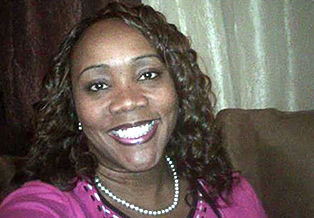
    Georgia Mathews earned her GED after dropping out of high school as a teenage mother. Mathews is now the Director of Admissions for East Georgia State College in Swainsboro, Georgia. In a recent interview, Mathews explains how she has used her personal GED success story to encourage other GED graduates entering college.

    What was your high school experience like and what led you to take the GED test?

    For me it was something I had to do, I was a 16-year-old drop-out and teenage mother, I was working in sewing factories and they were about to close. When two of the sewing plants closed, I had the opportunity to attend the local technical college and that’s where I signed up and took the test. My past principal had encouraged me to take the GED test, prior to that I had been out of school for 15 years.

    How did you transition from GED graduate to college graduate? What challenges did you face, if any?

    Initially I was afraid when I first enrolled in courses at the technical college, I had not done any of those classes. When I took a tour of the technical college and I asked about the different suggestions someone actually advised me to not take the microcomputer specialist classes because it was hard.

    I had to learn how to use a computer and I took classes in desktop publishing, Microsoft Office suite and learned how to troubleshoot a computer—including being able to take apart a computer and remove a hard drive.

    What were your next steps from there that got you to your current position at East Georgia State College?

    My first professional job was at the tech college after I completed CISCO networking specialist certification. I was working as a receptionist and wanted to do more. I came here (East Georgia State College) to pursue an Associate of Arts in Applied Science and Business that would build on my microcomputer specialist diploma. I then earned a Bachelor of Arts in Psychology and later a Master’s of Organizational Management.

    I was doing all of this as a single parent but I like a challenge and can’t be complacent.

    Do you feel like the GED prepared you for college level work?

    It better prepared me for college and it boosts your confidence. You may question if you’re smart enough to accomplish your goals but the GED is a stepping stone to all that you can do.

    What is your current role with East Georgia State College?

    I am the Director of Admissions and I came in as Assistant Director of Admissions.

    I wanted to be for young people what I really didn’t have, I had to use intrinsic motivation because I didn’t have anyone pushing me. No one knows how to help them somebody has to be there to tell them you can accomplish your goals.

    What has been your experience while working with GED graduates and their families?

    From time to time I have students come in and they have a GED, it really makes me glad that I can start the conversation about how I am also a GED graduate and I can relate to them. They need a little bit more coaching, they don’t know what the possibilities are for them. Just because their path is different doesn’t mean they won’t meet their goals.

    Those students often have parents that say their child should have finished traditional high school, I tell them I’m a GED grad and show them all of my degrees on the wall. It’s then that they see what the possibilities are for their child.

    How is East Georgia State College and the admissions department working with GED graduates to help them be successful?

    I have one-on-one conversations with them to see what do they enjoy doing, most careers align themselves with what they already enjoy. I help them identify what they want to do, I don’t solely base it on how they performed on the GED.

    We are an access institution, they don’t have to go to a tech college before they come to us. They know where they want to go and what degree they want to pursue and don’t need to do a certificate program.

    As an access institution GED students can come in and not take an entrance exam when they enroll.

    Have you had any interactions with GED graduates with the College Ready score levels?

    Yes, when they come in they seem a bit more confident. Most of them when you see the grades they made before they left traditional high school it’s often that they were a good student but life happened.

    What is your advice to other GED graduates?

    The biggest problem we have is we compare our path with someone else—the only competition we have is competing with ourselves.

    The GED credential shows you that you’re just as good as the person you were in high school with, you may not have gotten a high school diploma but you had to work hard and have the same knowledge.

    The GED can get you to any destination, it’s not about where you start but where you end up.
In Session Educator Newsletter