• Resource Reminder: GED.com Demo Site for Adult Educators
    By GED Author

    Last year we launched a GED.com demo site so educators can more easily view the student account experience.

    We’ve recently updated the demo site link and encourage you to set up an account to get a better idea of what your learners see when using their GED.com accounts.

    We know many of you have created Gmail accounts just to sign up for GED.com accounts. In addition, most teachers have a GED.com account they use to see the system, receive email alerts, etc. Occasionally the GED.com account experience will change slightly for new test-takers and it impossible to see the new features/look without setting up a new account.

    This demo site erases most of these common annoyances. Here’s how you can take advantage of the new GED.com account demo site in two easy steps:

    Step 1: Navigate to this website link: https://demo.ged-cloud.com/login

    Step 2: Sign-up for a GED.com account—just like you would on GED.com.

    A few things to remember:

    You can use a real or “fake” email account and password when you sign-up for a demo account.

    • Example: You could use “newstudent123@gg.com” or “signmeup@123.com”. As long as the email address follows a standard email address format, they can type anything they want. You can sign up for accounts as many times as you want
    • Example: If you have three new classes you can demonstrate the account setup for each one. None of the demo accounts you set up are real
    • *You also have the option to log in with any student account you create. It is a good practice to use the same password for all the student accounts you create in the demo environment, so you don’t have to worry about remembering it. *

    We hope that you enjoy this new tool and streamlined way for you to demonstrate to your students how to set up a GED.com account.

  • President’s Corner: Improving Health Outcomes through the GED Credential
    By GED Author

    Research has consistently shown that more education can lead to better physical, mental, and emotional health—resulting in longer, healthier lives.

    At GED Testing Service, our mission is to empower individuals and help change the trajectory of their lives by giving them a second chance at a high school credential.

    Through our GEDWorks program and partnerships with health insurers, we have seen firsthand how educational success can bring positive outcomes for individuals that even doctors notice. Earning a GED diploma can help a learner secure a better paying job and entry into a college program. It can also alleviate some social and economic stress factors that contribute to health issues.

    We created GEDWorks to help companies offer their employees and clients a GED credential at no cost. Participants are given access to a personal advisor, online GED study materials in English and Spanish, connections to local adult education programs, practice tests, and free GED tests.

    In a pilot with UCare, a Minnesota-based health insurer, Medicaid participants said they enrolled in the GEDWorks program because through this partnership, it was offered at no cost. Covering the cost of earning a credential often eliminates the financial burden that many students face when choosing between urgent necessities and investing in education. UCare GEDWorks graduates said the program was supportive, engaging and provided them with all they needed for a second chance at a high school diploma.

    In a recent article featured in a Minnesota medical journal, UCare Medical Director Dr. Bruce Cantor highlighted the benefits of the GEDWorks program, recommending that primary care doctors encourage their patients to complete their GED credential regardless of age. Earning a credential empowers patients with stronger skills to make decisions that have a positive impact on their health.

    The article also shares success stories of graduates of the program, including Lydia, a Medicaid recipient. She earned her credential in 2019 after many years of wanting to do so but not having the financial means. Lydia left high school as she struggled with mental health issues. Through the GEDWorks program, she was able to take practice tests and work closely with a personal advisor. Within just one month, she took the GED tests and passed. Lydia is now a GED graduate and first-year college student in a postsecondary degree program.

    Lydia’s story is one we see with many of our students and graduates. To date, GEDWorks partners have helped more than 4,400 adults successfully earn their GED credentials. Thousands more have successfully passed tests on their way to credentialing. We have seen GED graduates pursue college degrees at growing rates, with more than 50% attending college programs. Graduates also go on to enter every career field, further contributing to changing the trajectory of their lives and those around them.

    Offering Medicaid recipients, the opportunity to change their long-term health and economic outcomes through education is a worthy investment that helps those that need it most. We are proud of our partnerships with organizations that are invested in their employees’ health and well-being. We hope that more companies make education benefits such as earning a GED credential a priority to support employees, their families, and our communities—one graduate at a time.

    More information about the GEDWorks program, including participating employers, is available at GEDWorks.com.

  • New Season, New Promotions: Discounted GED® Prep Tools for Students
    By GED Author

    This month we’re offering discounts on GED Ready, GED Live and GED Flash for students.

    Starting October 20th and through the end of the month, October 31st, students can start their GED prep or improve their skills for an upcoming test with discounts on popular GED study tools.

    Students can take advantage of the following:

    • 25% off GED Live online classes with experts from Kaplan
    • 30 days extra for free on GED Flash interactive practice questions
    • 50% off the GED Ready practice test that indicates how likely students are to pass the GED

    Students can learn more about this promotion through their GED.com accounts. The terms and conditions are available here.

  • Online Spanish GED® Test and Online Retakes Now Available
    By GED Author

    Earlier this month we launched the online Spanish GED test and added the option to do online retakes for any GED test subject.

    These updates will help eligible students in most states start or complete their GED credential from home.

    Spanish Test

    Students can schedule any of the GED test subjects in Spanish through their GED.com accounts. To qualify, they must have a GED Ready “Green” score within the last 60 days and reside in a participating state and have access to a quiet, private room, a computer with webcam, sound and microphone, and a reliable internet connection.

    The check-in process for the Online Proctored (O.P.) GED test is in English, whether the student is taking the actual test in English or Spanish. This step-by-step Spanish-language video takes students through the check-in process.

    Online Retakes

    Students can now schedule to retake GED test subjects through the O.P. test after a failed attempt.

    After their second failed test attempt, they’ll be required to wait 60 days before scheduling another online proctored retake. A 60-day wait will be required between each subsequent online proctored retake.

    A GED Ready “Green” score is only required within 60 days of scheduling their first test in that subject. It is not required for a retake on that subject.

    Students can learn more about eligibility and available testing options through their GED.com accounts or here on the GED.com website. Educators can find additional information about the O.P. test here.

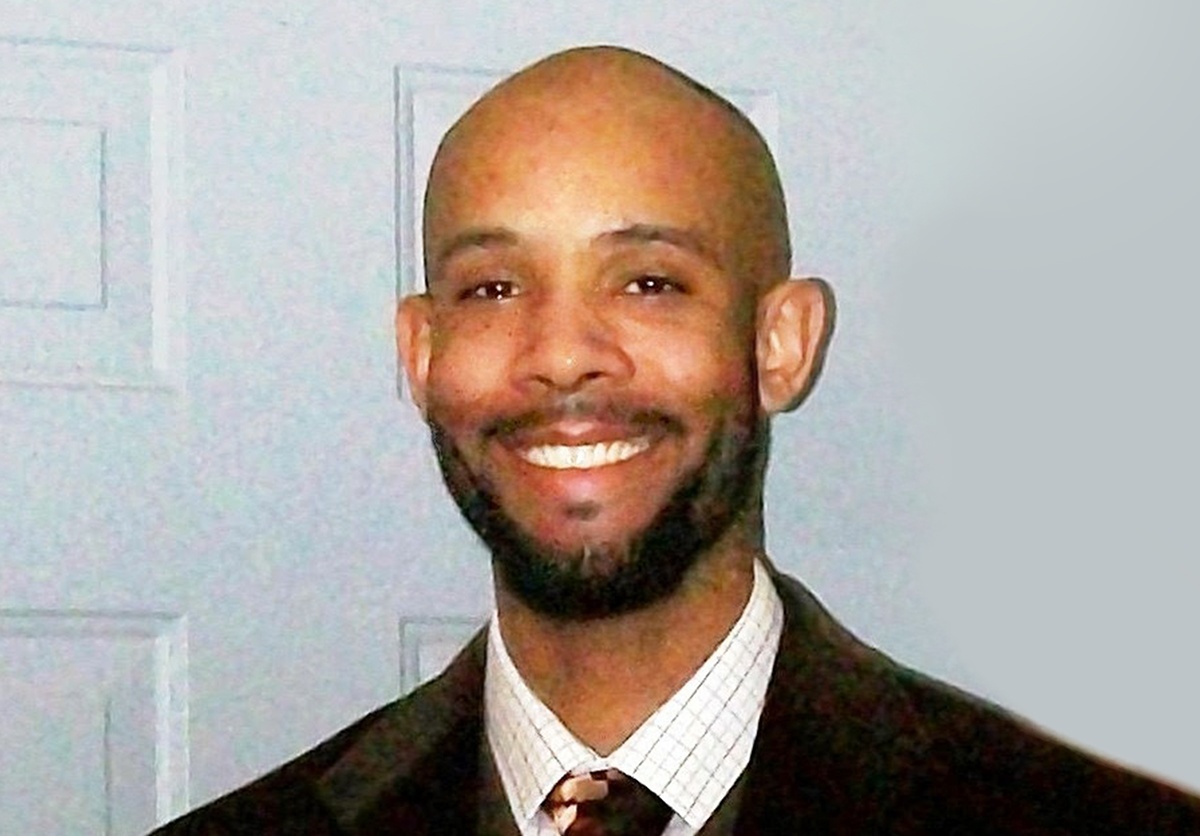
  • Diverse Voices of GED®: Darrell Miller, Corrections Educator
    By GED Author

    Mentoring and Empowering Students through Corrections Education

    By: Darrell Miller

    As I stood in an ice-cream line with my daughter in the mall in June 2019, I heard a startling “Ay-yo, Miller!” Distracted from my daughter’s thoughts on chocolate ice-cream with rainbow sprinkles, I saw a former student smiling, wide-eyed, and sharply dressed. At no more than 27, he told me where he was working and how good life was going for him. In turn, I expressed how proud I was of him, of the exchange we were having in the mall and was hopeful for more.

  • President’s Corner: Navigating Challenging Times and Our “New Normal”
    By GED Author

    For most of us, back-to-school has always been a time and opportunity to look forward—a time to get excited about what new adventures are ahead for students, parents, and educators; a time to set new goals.

    This year has given us a new perspective on what it’s like to learn, teach, and keep a positive outlook during uncertain times.

    Despite the challenges it has brought, it has allowed us to slow down, reflect, and adjust to our “new normal.” Even though we don’t yet know exactly what that means, one thing we can be assured of is that our students need us now more than ever!

    This pandemic has been a catalyst for change in our day-to-day lives and how we provide instruction and support to our students in and outside the classroom. We are being challenged to consider how we can best advance our students’ knowledge and future skills. This learning curve that we are all experiencing will bring challenges and some successes. At GED Testing Service, we want to ensure that you know we are committed to helping our educators and students figure out what works best for them. This means more access to distant learning tools, professional development resources for remote instruction, and thinking about what we can do to help many of our students struggling to make ends meet while earning their GED.

    Our current reality requires us to improve what we offer to help even more students get the credential they need to pursue their education and career goals. We launched the Online Proctored GED test pilot in May, and we are continuing to work with states to update policies and eligibility requirements to get even more students to graduate status. There are also several states offering free or discounted testing options to help students start or finish their GED while eliminating some of the financial burden associated with testing. We hear your concerns, appreciate your feedback, and we are taking action to make the GED test program an attainable gateway to a better future.

    In addition to all of this, our passion and drive to fight social injustice continue to be top of mind in all we do. We are making progress on our plan to drive more awareness of our Black, Latino, and Indigenous students. We are investing in partnerships with local and national organizations that align with our mission to provide support and resources to students of color. We are interviewing new GED Board members that will better represent our diversity, equity, and inclusion goals. In addition, we are meeting as a GED team to have an open dialogue on how each of us can be a stronger advocate for change within the organization and in our personal lives.

    We know that these times are stressful as many of us are trying to manage work, family, classes, and other responsibilities amid a pandemic that impacts every aspect of our lives.

    If you or your students are going through a tough time, we ask that you lean on your surrounding GED community and us for support—let us know how we can help you and your students.

    Thank you for all you do, and I wish you continued health, safety, and wellness.

    Vicki Greene, President of GED Testing Service

  • Utilizing the GED Ready® Score Report for Student Success
    By GED Author

    The GED Ready score report continues to evolve as we update the features to help students successfully prepare for the GED test subjects.

    Here is a look at the updates we’ve made this year.

    Linking the study tool via pop-up

    Linking a study tool in the Score Report helps to further guide students so they know exactly which pages or sections to study based on the skills they need to focus on. A number of our students don’t link their current study tool and are missing out on valuable study guidance. Some of our students shared with us that they aren’t linking their tool in the Score Report because they don’t always know the name of their book or online resource, but if they saw a picture of the cover it would help them to find and link it more easily.

    When we A/B tested this feature earlier this year, we saw more students successfully linking a study tool. This study tool pop-up is now available to all students on their GED Ready score reports.

  • New Student Age Requirement, Retakes, Spanish Testing and Other Important Updates for the Online Proctored GED® Test
    By GED Author

    Due to the continued importance of the Online Proctored (O.P.) GED test during the pandemic, we have continued to make this option more robust.

    In consultation with state policymakers, we have made updates to age eligibility requirements, specifically for students 16 and 17 who were not previously eligible for O.P. In a few weeks we will begin offering the option for retakes and we will launch the Spanish-language test, giving even more students access to this remote testing option.

    Most states now allow approved 16 and 17-year-olds access to the Online Proctored GED test.

    Remember that eligible 16 and 17-year-olds in participating states will need to go through an underage approval process, as they do for in-person testing. The underage testing approval process differs by state and information specific to each state can be found on the state policy pages on GED.com.

    The updated State-by-State Info on Online GED Testing webpage now shows what states are participating, underage testing eligibility and what states are offering free or discounted testing fees.

    You can find an updated policy fact sheet that covers the major policy differences between in-person and online testing on GED.com.

    Test retakes through the Online Proctored GED® test

    Starting in early October, eligible students in participating states will be able to retake GED test subjects through online testing (currently failed test subjects must be retaken in-person at an authorized test center). Students will be able to schedule a retake on O.P. after a failed attempt.

    After their second failed test attempt, they’ll be required to wait 60 days before scheduling another online proctored retake. A 60-day wait will be required between each subsequent online proctored retake.

    Students will be notified of this change through their GED.com accounts and through email when the option becomes available.

    Spanish-language testing option

    Starting in early October, eligible students will also have the option to take the GED test subjects in Spanish.

    It is important that educators and students know that the check-in process for the O.P. test is in English at this time, whether the student is taking the actual test in English or Spanish. Based on the feedback of state policymakers and an advisory group of educators working in programs with a large number of students who test in Spanish, we have developed communications and deliverables to help you and your students prepare for the check-in process.

    A key resource is this Spanish-language video that will take students through the check-in screens that they’ll see and the process they’ll experience prior to testing in Spanish.

    Students will be notified of this additional option in their GED.com accounts and by email. Students scheduling a Spanish-language test will also be notified and highly encouraged to watch the check-in process video.

  • Diverse Voices of GED: Catrell Medlock, Adult Education Instructor
    By GED Author

    My Call to “Good Trouble”: Advocating for change as a Black male educator

    By Catrell Medlock

    With the recent passing of the Honorable John Lewis, many Americans are asking themselves a lot of personal and thought-provoking questions. I am personally answering the call to be an advocate for equality while demanding change as a bold, beautiful, Black man. I will do as John Lewis requested of my generation, “and find a way to get in the way…find a way to get in trouble. Good trouble, necessary trouble.”

  • Fairness, Bias and Sensitivity Review Process for the GED Test
    By GED Author

    GED Testing Service has full review process for GED test questions to ensure that they are a fair measure of academic knowledge for all students.

    During the test development process, each reading passage and test item undergoes multiple reviews for various purposes, to ensure that the test item will be of the highest possible quality in measuring the relevant aspect of academic achievement. One of these reviews is the review by a “Fairness Committee.” The committee is made up of external reviewers (i.e, not employees of GED Testing Service or Pearson) who are experts in identifying and evaluating test items that may contain some aspect that may bias the item against or in favor of some subgroup of test-takers. Some of the subgroups that are considered for bias are racial or ethnic subgroups, gender, students with disabilities, etc.

  • New Online Proctored GED® Test Webinar for Educators
    By GED Author

    Our latest webinar provides updates about the student testing experience, related policies and additional resources for educators.

    August 2020 updates for the Online Proctored (O.P.) GED test include:

    Stats Update

    • 1,445 students have earned a GED credential through the O.P test as of August 4, 2020.

    Pilot and Next Steps for O.P.

    • The pilot phase is expected to continue through August and will transition to a more long-term offering when it is added formally by state agreements and contracts.
    • GED Testing Service (GEDTS) will not end O.P. delivery as an option in participating states between the transition period from pilot to longer-term testing option. *Some states may determine that they no longer want to offer O.P. beyond the pilot.

    Student Eligibility & Communications

    • Most states have turned on auto-eligibility for students who score a GED Ready “Green” score. *Some states have unique approval processes including DC, CT and SC. PA requires additional proof of state residency.
    • Currently students see O.P. information and registration information once they score a GED Ready “Green.” *Students in TX see this messaging prior to Green status.
    • Starting the week of August 17th, all students in auto-eligible states will see messaging about the O.P. test in their GED.com accounts.

    Whiteboard Tool

    • For test security reasons, students may not use physical scratch paper or dry erase boards on O.P. Test takers have access to an on-screen scratch pad and whiteboard for notetaking and math work.
    • With the new whiteboard tool, student can copy/paste questions, draw shapes and lines, zoom in and out, erase/clear, or resize and move the whiteboard around the screen.
    • Make sure students know where to practice with the whiteboard tool.

    Retakes and Retesting Reminders

    • Retests – due to a failed test launch/technical issues before the test is launched and the student does not see test items – are allowed on O.P.
    • Retests – due to an internet connection or VUE system issue, once verified, where students have seen test items – are allowed only in a test center.
    • Retakes – due to a failed test attempt – must be done in a test center. Students may request voucher on their GED.com account for a discounted retake in a test center.

    Retakes in the Future

    • GEDTS is working to configure systems to allow for at least one retake per subject through O.P. in the coming months (likely early October).

    Underage Testers

    • We are currently working with states to determine process and eligibility.Each state will determine eligibility by age. A few states could prohibit testing for those under 18, or for those under 17.

    Spanish-Language Testing Next Steps

    • We are currently exploring options and collecting feedback from programs and educators. Ultimately states will provide guidance to GEDTS and either ban or allow Spanish-language GED testing in O.P. with some English language test process components.

    Additional information about the O.P. test, including educator resources, is available in the full webinar and slide deck.

  • Interview with Amanda Bergson-Shilcock: Racial Equity and Workforce Development
    By GED Author

    Amanda Bergson-Shilcock, a Senior Fellow at the National Skills Coalition, highlights a recent report that provides recommendations for policies to support racial workforce diversity and greater employability pathways for all.

    Could you share more about the National Skills Coalition, your work at the organization and how the ‘Roadmap for Racial Equity’ report and research came together?

    National Skills Coalition is a non-profit policy organization that is funded by foundations and individual donors. Our work is focused on how to prepare people for the ‘good jobs’ or middle skill jobs that will help feed their family. My work is focused on the importance of adult education and workforce development.

    We have about 20,000 members across the country dedicated to advancing adult education and workforce policy. We know it is not enough to simply advance policy; we need to make sure we are looking at our work from a racial equity standpoint.

    We produced the Roadmap to Racial Equity report because we thought it was the right time to collect examples from across the country, share how they were able to enact policies, and give others a roadmap to implement in their own state. It took over 10 months of collecting data. Melissa Johnson was the lead on the report, Molly Bashay co-authored and we worked very closely with our Racial Equity National Advisory Panel. Having their voices was instrumental, many of the members have lived experience as Black and LatinX people and identify with historically-marginalized racial groups.

    The report has nine recommendations with policy solutions and historical context, could you do a brief overview of each of the recommendation areas?

    1) Develop racial equity goals and track progress: A lot of data collected by adult education and workforce programs could be disaggregated by race and demographics but it’s not. You can use that data to look at how you’re currently doing, and develop and implement racial equity goals.

    2) Supporting and investing in local programs: Adult education programs can do a lot to narrow racial equity gaps, but they need resources. This section emphasizes providing the needed public resources, policy guidance, and technical assistance.

    3) Technical training: Adult education is a critical onramp to community colleges, but historically there haven’t been good connections between postsecondary education and the adult education world. This section explores ways to support adults in postsecondary education.

    4) Corrections and re-entry: The challenge has been around the fact that so many millions of Americans have been incarcerated. With re-entry many are still running into additional barriers and being blocked from opportunities. Workforce policy changes can help remove some of those barriers and create opportunity for people who are returning from incarceration, who are disproportionately people of color.

    5) Sector partnerships: This is a way to bring together 10-12 employers in the same industry and have them talk about their hiring needs. This works well because in most cases if you’re a small or mid-size employer you don’t have the resources to go to a community college and ask them to create a training program just for your businesses. Sector partnerships can help with racial equity, if you’re thoughtful – such as if you have workers in lower-wage positions, and you can make a career path for them and prepare them for middle skill jobs.

    6) Apprenticeships: Congress has pushed to put more money in apprenticeships and we should continue to look at how do we make sure learners of color have equal access. Apprenticeships are often called “the other college without the debt,” it is a huge boost for many that are impacted by the racial wealth gap. Participants are paid while in the training program which reduces the stress of balancing work and education.

    7) Addressing foundational skills gaps: Black and Latinx people are significantly overrepresented in adult education, partly due lack of access to high-quality K12 education and disproportionate involvement in the juvenile justice system. Investing in proven models such as Integrated Education and Training is crucial to narrowing equity gaps.

    8) Support services: Childcare and transportation assistance is necessary, and particularly important because of racial equity issues. Transportation is important for those in need of accessing training and other services that may not be located near them.

    9) Public assistance: Majority of participants in public assistance programs are white, but people of color are disproportionally represented in the programs because of historical reasons. Improvement can be made by removing work requirements and restrictions on education and training.

    What role do educators have in addressing these issues and advancing racial equity even at the classroom level?

    1) Look at your own program or classroom data: take some of these policy recommendations and figure out if there is a program-level application. We recommend data goals for public policy, but you can also look at data within your program. Ask yourself who your program is working well for and who is it not working well for. What is the story that your data is telling you? How might you change your program to better serve learners of color?

    2) Is there something that you’re doing well as a program right now, that you can take to your elected officials and brag about to get more resources? (ex. If you’re running a successful training program with 90% Latinx apprentices, you should talk about it in a way that gets your organization leadership and others additional visibility)

    3) Think about how to help adult learners develop their own advocacy muscles. The Change Agent publication and the COABE Student Ambassador Program are helpful resources you can use with your class to help your students identify how they can advocate for themselves. It’s a way of speaking up and showing others how they value adult education and how it’s working for them.

    What do you believe should be done right now to help Black, LatinX and students of color considering current economic challenges and understanding the disproportionate impact COVID-19 has had in these communities?

    1) You want to look at if what you’re doing will have a disproportionate impact for your students. People are scared and dealing with a lot right now—they are economically stressed; kids are home from school, and some may be frontline workers. You don’t want to force anything but instead be mindful about decisions and solutions.

    2) Advocate for your learners and encourage them to use their voice as well. Elected officials respond to pressure–whatever you want to advocate for learners, whether it’s more money for Cares Act or other legislation, they need to feel the heat. Policymakers need to know that adult education funding needs to be addressed now, not in Spring 2021 when we’re in recovery mode. The best way to reach them is by making phone calls—phone calls must be answered by a human and can’t easily be ignored like email or Tweets.

    Do you have any book recommendations or other resources that relate to the topics included in this report and other current discussions around racial equity?

    The report “The Roadmap for Racial Equity: An imperative for workforce development advocates” is available here.

    Amanda Bergson-Shilcock leads the National Skills Coalition’s work on adult education and workforce policies that support US-born and immigrant adults with foundational skills gaps. She can be reached at AmandaBS@nationalskillscoalition.org and on Twitter @AmandaWorking
In Session Educator Newsletter