

• The Toughest GED Math Questions (and How to Solve Them)

    The toughest GED® Math questions (And how to solve them)

    Facing the GED® math test can feel daunting, but even the hardest problems follow predictable patterns. Once you know how to approach them, they become much more manageable.

    This guide offers insights and strategies to confidently tackle the toughest GED math questions and explains how to solve them.

    What makes a GED Math question “tough”?

    Not all GED math questions are hard, but the toughest ones tend to share a few key traits:

    • Multi-step reasoning: You’ll often need to combine concepts like percentages, geometry, or algebra in real-world scenarios.

    • Word problems: These require translating real-life situations into math equations. 

    • Interpreting graphs/data: Understanding what a graph shows is just as important as calculating. 

    • Time limits: You’ll need to solve efficiently without rushing into mistakes. 

    How many questions are on the GED Math test?

    The GED math test includes about 46 questions divided into two parts:

    • Non-Calculator Segment: ~5 mental math questions.

    • Calculator-Permitted Segment: ~41 questions with an on-screen calculator.

    You’ll have 115 minutes total, so pacing matters just as much as accuracy. That’s about 2.5 minutes per question (115 minutes ÷ 46 questions ≈ 2.5 minutes). The questions vary in format, including multiple choice, fill-in-the-blank, and drag-and-drop.

    Both calculator and non-calculator parts cover quantitative and algebraic problem-solving, common to all GED test subjects

    Practice GED Math questions (With step-by-step answers)

    These aren’t real test questions—but they reflect the types of problems many test-takers find most challenging.

    Practice question #1: Multi-step word problem

    A store is having a sale. A jacket originally costs $80 and is discounted by 25%. After the discount, a sales tax of 8% is applied. What is the final price? 

    How to Solve It 

    • Step 1: Find the discount → 25% of $80 = $20

    • Step 2: Subtract the discount → $80 − $20 = $60 

    • Step 3: Add tax → 8% of $60 = $4.80

    • Step 4: Final price → $60 + $4.80 = $64.80 

    Answer + Key Insight 

    The final price is $64.80. Always apply discounts before adding tax. 

    Common Mistake:

    Applying the tax first or combining percentages incorrectly.

    Math tip: The GED test’s on-screen calculator has a % function. Make sure to use this, or you will need to convert your percent to a decimal before multiplying (i.e., 20% = .20 and 8% = .08).

    Practice question #2: Solving an equation

    Solve for x: 

    3x + 5 = 20 

    How to Solve It 

    • Step 1: Subtract 5 from both sides → 3x = 15

    • Step 2: Divide both sides by 3 → x = 5 

    Answer + Key Insight 

    The correct answer is x = 5. Solve equations by getting the variable alone on one side step-by-step.

    Common Mistake:

    Forgetting to apply the same operation to both sides of the equation.

    Math tip: Make sure to watch for sign errors. Always do the opposite operation to move something from one side to the other.

    Practice question #3: Interpreting a graph

    A graph shows a line passing through the points (0,2) and (4,10). What is the slope of the line? 

    How to Solve It 

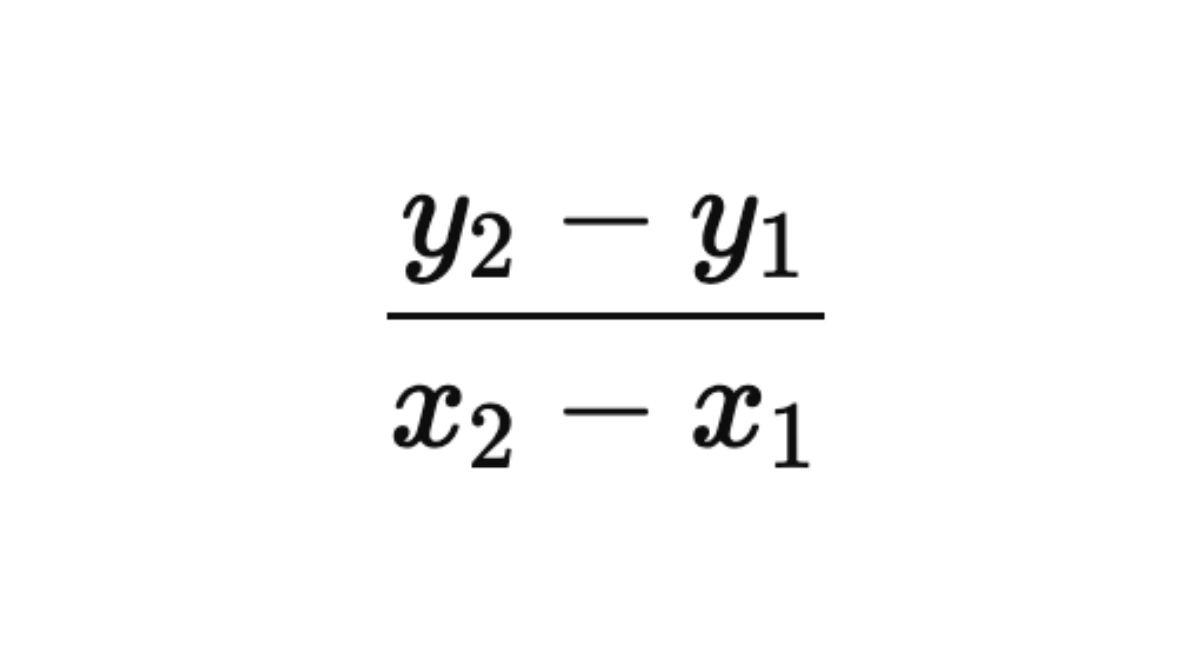
    • Step 2: Plug in values → (10 - 2) / (4 - 0) = 8 / 4 

    • Step 3: Simplify → slope = 2 

    Answer + Key Insight

    The slope is 2. Slope tells you how quickly the line rises. 

    Common Mistake:

    Mixing up the order of subtraction or using the wrong points.

    Math tip: Avoid swapping x and y. Remember: in an ordered pair like (4,10), the first number is always x and the last number is always y (i.e., x = 4, y = 10). It’s easy to remember because x comes before y in the alphabet.

    Want more practice? Check out these other GED practice questions.

    Common mistakes on the hardest GED Math questions

    Even strong test-takers can lose points by making avoidable errors:

    • Misreading the question: Watch for mixing up "at least" with "at most," overlooking units, and missing negative signs. Reread the question after solving.

    • Skipping steps: Break problems into smaller parts, show your work, and avoid mental math for multi-step processes. Use a checklist for operations:

      • Parentheses (Grouping Symbols): Solve inside ( ), [ ], or { } first.

      • Exponents: Evaluate roots and powers.

      • Multiplication & Division: Perform these from left to right.

      • Addition & Subtraction: Perform these from left to right.

    • Choosing answers too quickly: Read questions thoroughly, identifying keywords and what's asked.

    • Not checking your work: Double-check calculations and always verify that your final answer makes sense and directly answers all parts of the question.

    How to get better at GED Math fast

    Improving your GED math score doesn’t require guessing—it requires strategy:

    • Use GED Ready® to identify your current level.

    • Focus on weak areas instead of reviewing everything.

    • Practice similar question types until they feel familiar.

    • Build confidence with repetition.

    The best way to consistently reach the right GED math answers on test day is through focused preparation. These targeted GED Math tools and resources build mastery, preparing you for the toughest GED math questions and how to solve them. 

    Start your GED Math practice today

    With the right practice and approach, even the hardest GED math questions become solvable—and your goal gets closer with every step.

    Download the Official GED & METM app and create an account to get personalized guidance to help you prep for and pass the GED—directly from the makers of the GED!


  • The toughest GED® science questions (and how to solve them)

    The toughest GED® science questions and how to solve them

    Mastering the GED® science questions involves sharpening your analytical skills rather than memorizing a textbook. Many students preparing for the science test discover that the hardest questions involve reading graphs, analyzing experiments, and drawing conclusions from data rather than recalling definitions. 

    The good news is that these skills can be learned. This guide breaks down the test and some question types, offering clear strategies for the toughest GED science questions and how to solve them.

    What makes a GED science question tough?

    Tough questions test your ability to analyze data and experiments, and you can learn how to pass the GED science test by focusing on these core skills:

    • Interpreting graphs, charts, and experimental data

    • Reading dense passages quickly and accurately

    • Applying basic science concepts to real-world scenarios

    • Drawing conclusions based on evidence

    • Managing time pressure during multi-step reasoning

    Instead of asking for memorized facts, these questions test how well you can think like a scientist—using evidence to support an answer.

    To get familiar with question styles, you can explore official materials like the GEDⓇ science test overview and study guide.

    Practice GED science questions (with step-by-step answers)

    Disclaimer: These aren’t real GED science questions and answers from the test—but they reflect the types of problems many test-takers find most challenging.

    Practice question #1: Interpreting a data table

    A table shows plant growth over 4 weeks under two conditions: sunlight and no sunlight. Plants in sunlight grew from 5 cm to 20 cm, while plants without sunlight grew from 5 cm to 8 cm.

    What conclusion can be drawn from this data?

    How to solve it

    • Step 1: Compare starting values → both start at 5 cm

    • Step 2: Compare growth → sunlight: +15 cm, no sunlight: +3 cm

    • Step 3: Identify the variable → sunlight exposure

    • Step 4: Draw conclusion → sunlight significantly increases plant growth

    Answer + key insight:
    Plants grow much more with sunlight. Focus on change over time, not just final numbers.

    Common mistake:
    Only looking at final height instead of comparing growth differences.

    Practice question #2: Reading an experiment scenario

    A student tests how temperature affects how quickly sugar dissolves in water. One cup is cold, one is warm, and one is hot. The sugar dissolves fastest in hot water.

    What is the independent variable in this experiment?

    How to solve it

    • Step 1: Identify what is changed → temperature

    • Step 2: Identify what is measured → dissolving speed

    • Step 3: Independent variable = what is changed

    Answer + key insight:
    The independent variable is temperature. It is the factor the student intentionally changes.

    Common mistake:

    Confusing the independent variable with the result (dissolving speed).

    Practice question #3: Interpreting a graph

    A graph shows a line increasing as time increases, representing distance traveled by a car. 

    What does the slope of the line represent?

    How to solve it

    • Step 1: Identify axes → time (horizontal x-axis), distance (vertical y-axis)

    • Step 2: Understand slope → change in distance over time

    • Step 3: Interpret meaning → how fast distance increases

    Answer + key insight:
    The slope represents speed. In science graphs, slope often shows a rate (i.e., miles per hour).

    Common mistake:
    Describing what the graph looks like instead of what it means.

    How many questions are on the GED science test?

    There are usually 34–40 GED science test questions. There are multiple question types that focus on reasoning, data analysis, and scientific literacy. How many GED science questions there are can vary slightly by test form, but students should expect a mix of:

    • Short answer and multiple choice questions

    • Questions based on passages, charts, and experiments

    Rather than focusing on memorization, preparation should center on interpreting information and applying scientific reasoning. Many of the toughest questions involve analyzing data rather than recalling facts.

    To build familiarity with questions, try out these official GED practice questions.

    Common mistakes on the hardest GED science questions

    Students often miss challenging questions for predictable reasons:

    • Skipping the passage or data before answering

    • Guessing without analyzing evidence

    • Misreading graphs, labels, or units

    • Overthinking instead of using provided information

    • Focusing on memorization instead of reasoning

    Avoiding these mistakes is the best way to consistently choose the correct GED science test answers on test day.

    How to get better at GED science fast

    Improving your score on the GED science test comes down to consistent practice and smart strategy:

    Take the next step toward your GED credential

    The fastest way to build confidence is through practice. Each question you work through helps you strengthen your ability to analyze information and think critically under time pressure.

    Download the Official GED & METM app and create an account to get personalized guidance to help you prep for and pass the GED—directly from the makers of the GED!

  • The Toughest GED Language Arts Questions (and How to Solve Them)

    The toughest GED® Language Arts questions and how to solve them

    Students sometimes worry about passing the GED® Reasoning Through Language Arts (RLA) exam because they need to answer about 46 questions and write one essay in 150 minutes. 

    That can sound like a lot, but you can do it!

    With practice, you can tackle the toughest GED Language Arts questions and solve them. You can start practicing right now with the example questions we’ve created.

    You can also explore our mobile app for additional help. 

    GED RLA practice questions and answers

    These aren’t real test questions—but they reflect the types of problems many test-takers find challenging. They also reflect similar GED Language Arts test answers that may appear. 

    Practice question #1: Making an inference from a newspaper article

    There is a secret about Lindon's Easter Egg Hunt. Everyone knows it begins right on the hour and lasts for a minute or two. “If you ever want to see 15,000 eggs disappear in less than a minute. . .” the mayor told the city council April 6. Then she revealed that she holds back a special stash for stragglers, and those eggs have some of the best prizes.

    Question: What can the reader most reasonably infer from this information?

    • The reporter didn’t get the full quote, as indicated by the ellipses.
    • The mayor likes to withhold important information from the city council and residents.
    • The reporter is biased in suggesting a lack of transparency in the city government.
    • The mayor recognizes how important the Easter Egg Hunt is to children, and doesn’t want them to be disappointed.

    How to solve it

    1. Identify the key facts in the passage.

    2. Ask what conclusion those facts support.

    3. Eliminate answers that go beyond the evidence.

    4. Choose the answer most directly supported by the passage.

    Answer

    The fourth answer is correct. 

    Ellipses can indicate that the speaker left something unstated that the audience would understand. However, there’s nothing in the paragraph to suggest that anyone speaking in a public meeting with a reporter present is hiding important information.

    Practice question #2: Revising for clarity and grammar

    The original sentence: The students finished the project late, however they still presented it confidently.

    Question: Which revision is most correct?

    • The students finished the project late, however, they still presented it confidently.
    • The students finished the project late; however, they still presented it confidently.
    • The students finished the project late. They still presented it confidently.
    • The students finished the project late and they still presented it confidently.

    How to solve it

    1. Check whether punctuation joins two independent clauses correctly.

    2. Look for the clearest, grammatically correct revision.

    3. Pick the choice that fixes the error without making the sentence awkward.

    Answer

    This one is tricky because there are two correct answers, but the second revised version of the sentence is the best answer because it connects the independent clauses most clearly. 

    Try more practice questions

    Practice question #3: Short essay question

    Are Tweens Ready for Cell Phones? 

    View 1: “Tweens” Are Ready for Cell Phones by Deborah Pendergast 

    Thank you for inviting me to the first “Safer Kids Summit.” We are here to discuss ways to keep our children safe in an increasingly complex world. Today’s focus is on technology—specifically on the ideal age to give kids their own cell phones. As a representative of a large telecommunications company, I receive many inquiries from parents on this topic, and this is what I tell them: It depends on the child, of course, but in general, age 10 is just about right. 

    A 2012 survey by the National Consumers League backs me up. The survey found that almost 60 percent of children ages 8 to 12 already have cell phones. These “tweens” can contact their parents at any time, and vice versa, giving the kids a sense of empowerment and their parents a feeling of security. Caroline Knorr, of the group Common Sense Media, says, "We want our kids to be independent, to be able to walk home from school and play at the playground without us. We want them to have that old-fashioned, fun experience of being on their own, and cell phones can help with that.” Picture the following scenario: You told your fourth-grader that you would pick her up after school, but you are stuck in traffic. She is waiting for you …and waiting, and waiting. But if you both have cell phones, you can call her to let her know you are delayed, and she can go back inside the school, where there are adults around. You both breathe a sigh of relief.

    Psychologists tell us that the period between ages 10 and 12 is one of growing independence. It is a time to teach children about responsibility, and to give them opportunities to earn our trust. Providing a 10-year-old with a cell phone offers an ideal way to achieve these goals and gives parents peace of mind as well.” 

    View 2: Wait Until They Are Older by Linda Sidner 

    Good morning! I come to this topic as a parent and a veteran teacher of so-called “tweens.” I love kids this age for their curiosity and energy, but those same qualities can lead to trouble if not overseen by adults. That’s why giving children their own phones actually makes them less safe, not more. I believe that the best age for a cell phone is 16, the point at which we consider kids grown-up enough to learn to drive — and even then, parents must set firm limits on phone use! 

    Why are tweens with phones less safe? For one thing, parents may be lulled into a false sense of security if their kids have phones. They may become careless about knowing where their child is and who he is with, thinking, “I can always reach him on his phone.” For another, cell phones give children access to all the frightening, dangerous, and inappropriate sites on the Internet, with no parent nearby to monitor this activity. But perhaps the most worrisome aspect of giving cell phones to children is the rise in “cyberbullying” or “text bullying.” Text bullying means using a cell phone to send cruel, embarrassing, or false text messages to or about someone. In one study, researcher Elizabeth Englander found that by middle school, over 90% of children report that they use their cell phones to text or go onto the Internet. She also found that in grades 3 through 5, between 14 and 19 percent of children reported being victims of cyberbullying. What if it’s your child on the receiving end of this cruelty? Or, perhaps worse, what if your child is the bully? Children of this age are simply not mature enough to handle this technology, and we shouldn’t expect them to be. It’s our job as adults to protect them. That’s why I say: It’s better to wait. 

    Task: In your essay, develop an argument to claim which view is better supported. Use evidence from both opinions to support your decision. 

    How to solve it

    1. Read both views carefully.

    2. Choose which view is better supported.

    3. Pick out evidence that supports your argument.

    4. Write out your thoughts clearly and use the evidence to support your argument.

    Answer

    There is no “right answer” for this part of the exam. 

    Instead, your score depends on how well you analyze both views and clearly write your evidence and reasoning. You also need to ensure your essay is grammatically correct. 

    Explore more essay examples

    How to get better at GED Reasoning Through Language Arts fast

    Here are more ways to practice:

    • Read news articles: You’ll read a lot of information in a short amount of time due to how news articles are formatted.

    • Write essays about topics you like: Practice formatting your arguments and thoughts by writing essays about topics that interest you. 

    • Use GED ReadyⓇ: Use this practice test that mimics the real GED RLA exam. It will not only tell you your score but also what areas you should study more to strengthen your skills. (We also have a shorter free version.)

    You can also try our mobile app!

  • The Toughest GED Social Studies Questions (and How to Solve Them)

    The Toughest GED® Social Studies Questions (and How to Solve Them)

    The GED® Social Studies exam doesn’t have to be intimidating. This test is more about reading comprehension and reasoning than memorizing a bunch of facts. Learn about the toughest GED Social Studies questions and how to solve them below.

    What makes a GED Social Studies question “tough?” 

    One major reason students can struggle with GED Social Studies questions is because it requires you to read dense (and often dry) texts or charts in a short amount of time. Also, instead of simple yes-or-no questions, students are also asked to answer if the text is biased or creates propaganda, which can be tricky to know. 

    Practice GED Social Studies questions (with step-by-step answers)

    Below aren’t real GED Social Studies questions and answers, but are similar to problems many students find tough to answer.

    Practice question #1: Making an inference from a historical passage

    This is a passage from the Declaration of Independence:

    “Nor have We been wanting in attentions to our British brethren. We have warned them from time to time of attempts by their legislature to extend an unwarrantable jurisdiction over us. We have reminded them of the circumstances of our emigration and settlement here. We have appealed to their native justice and magnanimity, and we have conjured them by the ties of our common kindred to disavow these usurpations, which, would inevitably interrupt our connections and correspondence.”

    Question: What can the reader most reasonably infer from this information?

    • The colonists are impatient and unwilling to put up with the king’s laws.
    • The colonists tried many other things before declaring independence, all to no avail.
    • The colonists feel no kinship with the king and Britain.
    • The colonists find British rule magnanimous.

    How to Solve It

    1. Identify the key facts in the passage.

    2. Ask what conclusion those facts support.

    3. Eliminate answers that go beyond the evidence.

    4. Choose the answer most directly supported by the passage.

    Answer

    The second answer is correct. 

    The passage has four statements in a row beginning with “We have” and goes on to explain different things the colonists tried before declaring independence that have not worked. 

    Practice question #2: Identifying bias or propaganda

    A wartime poster says that anyone who disagrees with a policy is unpatriotic.

    Question: Which answer best explains why this is propaganda?

    • The poster is telling people what to do.
    • The poster is appealing to people’s emotions.
    • The poster is using emotional manipulation to force people to agree with the policy.
    • The poster is informing people of a new policy.

    How to solve it

    1. Look for emotionally loaded language.

    2. Ask whether the source is trying to inform or persuade unfairly.

    3. Compare the language with more neutral, evidence-based wording.

    Answer

    The correct answer is the third one. 

    “Anyone who disagrees with a policy is unpatriotic” is a form of pressuring people to agree with something through emotional manipulation rather than balanced evidence.

    Practice question #3: Interpreting a chart or table

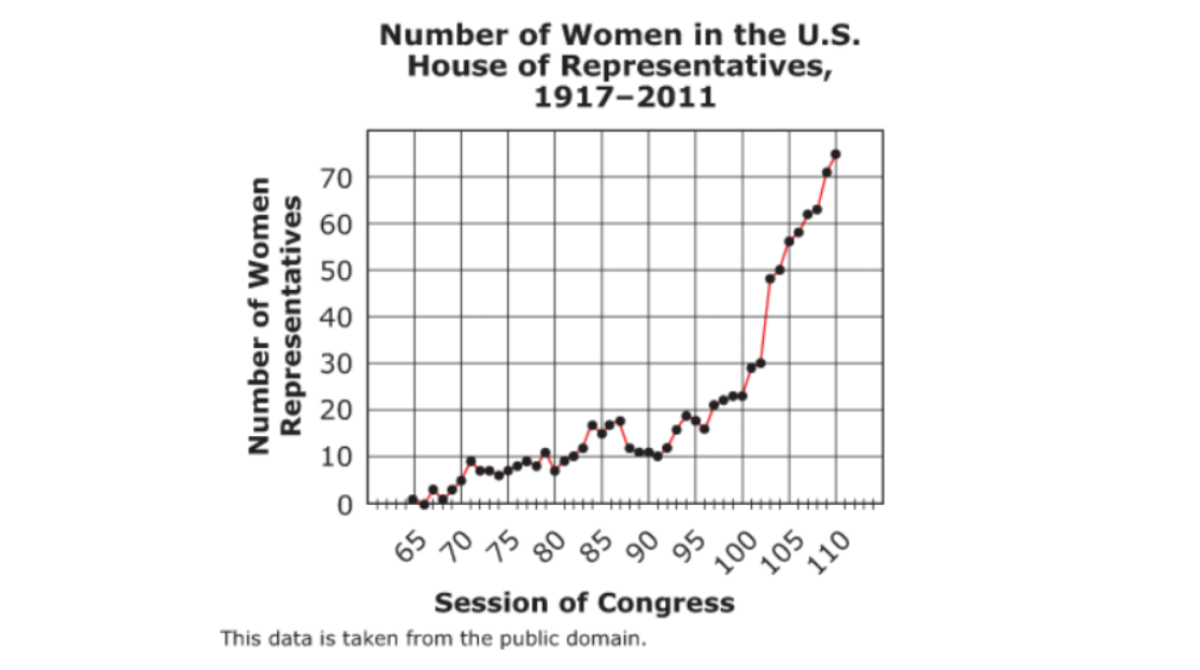
    Since the 19th century, many people have worked for equal rights for women. Much of this effort focused on suffrage, which is the right to vote. One of the greatest victories for advocates of women’s rights was ratification of the 19th Amendment to the U.S. Constitution in 1920. The 19th Amendment stated that “The right of citizens of the United States to vote shall not be denied or abridged by the United States or any State on account of sex.” However, the struggle for equality in other areas of society continued even after the 19th Amendment grated woman suffrage. 

    View chart

    Question: What do the passage and graph indicate about the United States in the 20th and 21st centuries?

    • Social movements halted inequalities within.
    • The changes in voting rights impacted representation in the U.S. government.
    • Democratic principles are more powerful than cultural traditions.
    • The Civil War Amendments created greater democratic opportunities for women.

    How to solve it

    1. Read the title, labels, and time period.

    2. Identify the biggest trend in the data.

    3. Focus on what the graph proves, not implications.

    4. Pick the answer supported by the chart and passage.

    Answer

    The correct answer is the second one. 

    The graph and passage focus on how changes in voting rights led to more women voting—which led to more female representatives. Neither the passage nor the graph discusses the Civil War, cultural values, or claims that inequalities no longer exist. 

    Practice more example questions, and take a look at our GED Study Guide for more information. 

    How many questions are on the GED Social Studies test?

    There are about 35 questions on the GED Social Studies test, and they must be completed in 70 minutes or less.

    Common mistakes on the hardest GED Social Studies questions

    Here are the top six mistakes students make when taking the GED Social Studies test:

    1. Reading too fast, leading to misunderstanding the context of the passage or even the question.

    2. Skipping steps to finish on time.

    3. Picking answers too quickly without considering the question.

    4. Misreading graphs, leading to a misunderstanding of the information.

    5. Not checking their work and catching mistakes.

    6. Choosing answers that sound good but aren’t supported by the text/graph.

    How to get better at GED Social Studies fast

    Practice is the best way to get better at GED Social Studies. You can practice by:

    • Using practice tests: This will allow you to understand what kind of questions will be asked and what the correct answers are without pressure.

    • Studying the most challenging areas: If you struggle with a certain section, say interpreting graphs, take the extra time to focus on that area. 

    • Retaking practice exams: Practice exams will often share your score and where you can improve. Use this information to improve your study plan. 

    • Download our mobile app, GED & Me™: Work through practice questions, and work up an individual learning plan based on your GED Ready® Score Report.

    • Try GED Flash: This paid tool has 1000s of interactive practice questions in both English and Spanish.

    • Use MyGED®: This provides you with GED resources on the go so you can study whenever and wherever you want. Sign up today!

  • Get the GED in 6 Weeks: A Plan and Schedule for Working Adults

    Balancing a full-time job while preparing for the GED® test isn’t easy. You have little time, your energy is stretched, and studying can feel like too much. With the right approach, it’s possible to follow a GED plan for full-time working adults and make real progress in just six weeks.

    This guide gives you a realistic, structured path to help you stay focused, avoid burnout, and move efficiently toward your goal.

    Can you really get the GED® in six weeks?

    Yes. Many adults are able to make it happen. The key is consistency, not cramming.

    If you can commit about 1–2 hours a day, most days of the week, you can build enough momentum to get the GED in six weeks. Your timeline will depend on your starting point, but a focused plan helps you avoid wasting time on what you already know.

    Instead of trying to master everything, focus on what matters most—being ready to pass.

    What you need before you start

    Before jumping into your GED schedule for full-time working adult success, take a few simple steps:

    These steps help you identify your strengths and weaknesses so you can study smarter, not longer. For example, you might discover you’re already close to passing Social Studies but need more work in Math.

    Your 6-week GED study schedule (while working full-time)

    Week 1: Assess and plan

    Start by taking GED Ready practice tests in each subject. Use your results to:

    • Identify 1–2 subjects to focus on first
    • Create a weekly study schedule (evenings and weekends work best)
    • Set realistic daily time blocks (60–90 minutes)

    This week is all about building a clear, focused plan.

    Weeks 2–3: Focus on your first subjects

    Choose one or two subjects from Mathematical Reasoning, Social Studies, Reasoning Through Language Arts, and Science.

    • Study 60–90 minutes/day, 5 days per week
    • Use official prep materials and practice questions
    • Focus on weak areas instead of reviewing everything

    Sticking to just a couple of subjects keeps your workload manageable and prevents burnout.

    Week 4: Test your first subjects

    Now it’s time to check your progress.

    • Retake GED Ready tests
    • If you score “likely to pass,” you’re ready to move forward
    • Book your GED test in those subjects

    Scheduling your tests in these subjects will help you maintain momentum and bring you closer to getting that GED.

    Weeks 5–6: Finish the remaining subjects

    Repeat the same process for the subjects you haven’t yet prepared for.

    • Study consistently during the week
    • Take the final GED Ready tests
    • Schedule your remaining exams as soon as you’re ready

    By the end of week six, you can realistically complete all four subjects.

    How to balance GED study with a full-time job

    When you’re working full-time, the biggest challenge isn’t necessarily the material. It’s managing your time and energy.

    Here are some practical ways to stay on track:

    1. Time block your study sessions: Same time each day builds routine
    2. Use micro-sessions: Even 30–60 minutes is effective
    3. Leverage weekends: Catch up or get ahead
    4. Limit your focus: Don’t study all four subjects at once
    5. Stay consistent: A little every day beats intensity every time

    Don’t forget to build rest time into your schedule. Overloading yourself leads to burnout, which slows progress. 

    Tips to stay on track and pass faster

    If your goal is to get the GED in six weeks, keep these strategies in mind:

    • Focus on test readiness, not perfection
    • Use GED Ready as your progress benchmark
    • Schedule tests early to stay motivated
    • Study your weakest areas first
    • Trust that small, daily progress adds up

    Start your GED plan today

    The fastest way to reach your goal is to start now. Six weeks from now, you could be holding your GED credential and opening the door to new opportunities.

    Create your account, take your practice test, and begin building your GED plan for a full-time working adult.

  • What to Have Ready Before You Start the GED Test

    You’ve put in the study time and worked through practice questions. Now it’s time to take the GED® test.

    This guide is a simple checklist of what to have ready before you start the GED test. When these essentials are in place, you can avoid last-minute stress and focus on doing your best.

    1. Set up a GED.com account

    Before anything else, you'll need an official GED account. This is your hub for the entire testing process.

    With your account, you can:

    • Register for the test
    • Schedule exam dates
    • Track your progress

    Create your account on GED.com to get started.

    Tip: Fill out your profile completely and make sure your personal details are accurate. This helps prevent delays later, especially when it comes to ID verification. 

    2. Assess your readiness

    Before scheduling your test, it’s important to know where you stand. 

    Taking a GED Ready® practice test first can help you:

    • Predict your likelihood of passing
    • Identify areas where you may need more review
    • Build confidence before the real exam

    If your scores show you need more prep, explore the official GED study resources.

    3. Schedule a test date (or plan to schedule)

    Having a test date on the calendar creates momentum and accountability.

    Before scheduling a GED test, you should:

    • Choose which subjects you’ll take
    • Decide between online and in-person testing
    • Select a date and time that works for you

    Tip: Avoid scheduling too many subjects at once. Taking one or two at a time can help you stay focused and perform better.

    4. Use valid identification

    You’ll need a government-issued photo ID to take the GED test.

    Make sure:

    • Your ID is valid (not expired)
    • The name matches your GED account exactly

    Taking a moment to confirm this ahead of time can save you from delays or the trouble of having to reschedule your test.

    5. Find the right testing setup (especially for online testing)

    If you’re planning to take the GED test online, your testing environment matters.

    Before test day, make sure you have a:

    • Reliable computer or laptop
    • Stable internet connection
    • Quiet, private space without interruptions

    You’ll also need to complete a system check to confirm your device meets testing requirements.

    If you’re testing in person, this step is much simpler, although it’s still important to plan for the location and commute time.

    6. Prepare your workspace and materials

    While specific rules vary, it helps to think through your setup ahead of time. 

    Before starting your test:

    • Block off enough uninterrupted time
    • Set up a comfortable workspace
    • Minimize distractions as much as possible

    For a full breakdown of what you’re allowed to bring and what to expect, check out our GED test day FAQs

    Common mistakes to avoid before starting the GED test

    Even well-prepared test-takers can run into issues if they skip key steps. Watch out for these common mistakes:

    • Skipping the GED Ready® practice test
    • Scheduling too many subjects at once
    • Waiting until the last minute to check ID or tech requirements
    • Not creating a distraction-free testing environment

    A little preparation up front can prevent unnecessary stress later. If you’re looking for more ways to prepare, read our article: 6 Ways to Prep for the GED So Test Day Is a Breeze.

    Get everything ready and take the next step

    Knowing what to have ready before you start the GED test can make the whole experience smoother and less stressful. By checking off these essentials ahead of time, you can walk into your test feeling confident and prepared.

    Create your GED account and get started today.

  • How to take the GED® in Spanish: Get your high school equivalency

    Earning your high school equivalency opens new opportunities. For Spanish-speaking adults, this path is fully accessible and easier than you might think. 

    If you’ve been wondering how to take the GED in Spanish, this guide is for you. We’ll cover eligibility requirements, preparation with official Spanish resources, and testing options available through GED.com, helping you confidently take the next step toward your diploma.

    To access the official GED website in Spanish, visit GED.com/es.

    Para acceder al sitio web oficial del GED en español, visita GED.com/es

    Can you take the GED in Spanish?

    Yes, you can take the GED in Spanish. The official GED test is available entirely in Spanish in many states. The GED test in Spanish offers the same recognized high school equivalency as its English counterpart.

    The Spanish-language exam includes four subjects: Reasoning Through Language Arts, Mathematical Reasoning, Social Studies, and Science. This Spanish version maintains identical content and passing standards, ensuring acceptance for college or employment. You can take the GED in Spanish, with confidence in its full validity.

    Eligibility generally requires candidates to be at least 18 (some states allow 16–17-year-olds), not in high school, and without a diploma. Always visit GED.com for accurate, state-specific details.

    Signing up for the GED test in Spanish

    Signing up is straightforward.

    1. Create a free GED.com account at the sign-up page.
    2. During registration, on the “Select exam language” page, choose between English and Spanish. Eligibility rules (age, residency) are state-specific.
    3. Schedule each of the four mandatory exams individually. Consult our state-specific eligibility and scheduling for more information.

    Preparing for the GED test in Spanish

    Effective preparation is key to success on the GED test in Spanish. Many official Spanish-language resources can support your journey.

    Study resources and readiness

    Local adult education centers, community colleges, and online providers offer Spanish-language preparation courses. Find these resources, including testing centers and adult education programs, at GED.com.

    For free and low-cost study options, consider:

    • Local adult education centers: Offer free or low-cost preparation
    • Community colleges: Provide affordable courses/guides
    • Public libraries: Offer free study guides/practice tests
    • GED.com: Official GED practice tests in Spanish to gauge readiness (fees apply)

    The GED Ready® practice test is invaluable and available in Spanish. It mirrors the official GED exam, providing a realistic readiness score (“Green” for ready), identifying strengths, and offering a personalized study plan. 

    Taking the GED test in Spanish: Options and value

    The GED test in Spanish offers flexible testing options and consistent credential value.

    Testing options

    You can take the GED test officially in Spanish at authorized physical test centers nationwide. Eligibility involves not having a high school diploma, not being currently enrolled, and meeting state-specific age requirements.

    For home testing, the option to take the GED in Spanish online is available in many jurisdictions. The GED test is offered in Spanish via online proctored testing in select states. Online availability varies significantly. Technical requirements include a reliable internet connection, a computer with a webcam/microphone, and a quiet, private testing environment. 

    Consistent cost and credential value

    Regardless of how or where you take the GED test in Spanish, cost and credential value remain consistent. The exam is fully available in Spanish, with identical content and eligibility to the English version.

    Cost does not differ by language or test format, as pricing is determined per subject by each state. 

    The GED credential holds the exact same value whether taken in English or Spanish, with its acceptance for college or employment unaffected by language.

    Ready to start your GED journey in Spanish?

    Your high school equivalency is within reach with the official GED in Spanish and comprehensive resources available on GED.com. 

    To learn more about how to take the GED in Spanish, visit GED.com today to create your account, explore study materials, and schedule your exams. Your future starts now!

  • How much does getting a GED® cost? Fees, courses, & materials

    If you’re planning to earn your GED® credential, you might be wondering about the GED cost and what you’ll need to budget.

    The good news is that earning your GED is often more affordable than you might expect. While costs vary slightly by state and how much preparation support you choose, the total investment is typically manageable and largely within your control.

    This guide provides a clear, consolidated breakdown of all potential GED costs in one place, including:

    • Required test fees
    • Possible retake costs
    • Practice tests
    • Study materials
    • Classes

    How much does it cost to get a GED?

    Most people spend about $120–$200 total to earn their GED credential.

    The only required cost is the GED test itself. In most states, the four subject tests together cost about $120–$160 if you pass each one the first time.

    Your total GED costs may be slightly higher if:

    • Your state charges higher testing fees
    • You need to retake a subject
    • You choose optional study tools or classes

    In most states, the GED test costs the same whether you take it at an official test center or online. Because pricing and retake policies are set by each state, the best way to confirm your exact cost is to check the official pricing page

    GED cost overview

    Cost Type

    Typical Cost

    Required?

    GED test (per subject)

    $30–$40

    Yes

    GED test (all 4 subjects)

    $120–$160

    Yes

    Retake fees

    $0–$40 per subject

    Sometimes

    GED Ready® practice tests

    $6–$7 per test

    No

    Study materials

    Free–$100+

    No

    GED classes

    Free–$500+

    No

    The GED test itself is the only cost you have to pay. Everything else depends on how much support you want while preparing.

    The required cost: GED test fees

    The GED test has four subjects:

    • Mathematical Reasoning
    • Reasoning Through Language Arts
    • Science
    • Social Studies

    You pay for each subject separately. In most states, the cost is about $30–$40 per subject, or roughly $120–$160 total if you pass all tests on your first attempt.

    GED test fees are set by each state, so pricing can vary slightly. Some states may also charge small additional fees depending on location or testing format.

    Retakes: What if you don’t pass the first time?

    Not everyone passes on their first try, and that’s okay.

    Retake policies and pricing vary by state. Some states offer:

    • Discounted retakes
    • A limited number of reduced-price attempts
    • Promotional retake options

    Retakes typically cost $0–$40 per subject, depending on your location and how many times you’ve tested.

    It’s smart to budget for at least one possible retake, just in case. Checking your state’s official policies ensures that you have the most accurate and up-to-date information. Once you pass a subject, you don’t have to take it or pay for it again. 

    Optional costs that can help you prepare

    While only the test fee is required, many students choose additional tools to feel confident on test day.

    GED Ready practice tests

    Cost: About $6–$7 per subject

    These official practice tests show whether you’re likely to pass the real exam and provide a score report with study recommendations. They are optional but highly recommended.

    Study materials

    Cost: Free–$100+

    Many free study tools are available directly through GED.com, including practice questions and online resources.

    GED classes

    Cost: Free–$500+

    GED preparation classes may be:

    Some students also choose support programs from GED.com or bundled programs like GED+TM for extra structure.

    Remember: Classes are optional. Many learners successfully prepare using free resources.

    What’s the total GED cost for most people?

    Here’s what most learners spend:

    • $120–$160 for the four required tests
    • $150–$200 total if adding practice tests or minor prep tools

    Costs may be higher if:

    • Multiple retakes are needed
    • You choose paid classes
    • You purchase additional study materials

    Many students keep costs low by using free GED.com resources and preparing carefully before scheduling each subject test.

    How to find your exact GED cost

    To determine your exact GED cost:

    1. Select your state on GED.com
    2. Review test and retake fees.
    3. Decide whether you want optional prep tools.

    You can create a free account to get started.

    GED.com is the official source for accurate pricing, policies, and registration information. Checking here helps you avoid outdated information or scams and ensures you’re getting the correct details for your state.

  • 6 Pieces of Advice for Earning Your GED in 2026

    New year, fresh momentum. Here are six simple, practical pieces of advice to help you stay focused, encouraged, and moving forward toward your GED credential.

    1) Start small, start now

    Why it works: Big goals get easier when you break them into tiny steps—30 minutes of study, one practice section, one concept. 
    Try this: Choose one action you’ll complete today (e.g., “Review RLA practice questions). Put it on your calendar like an appointment. GED Flash is a great tool for quick study sessions like this.

    2) Progress beats perfection

    Why it works: You don’t need perfect study days. You need consistent ones. Celebrate small wins (finishing a module, scheduling your test). 
    Try this: Keep a micro‑wins log—three bullet points each week that capture what you did, not just what you plan to do. The GED & Me mobile app will track progress for you, download it here.

    3) Learn the tools you’ll use on test day

    Why it works: Familiarity reduces anxiety. Practicing with official question types, the on‑screen calculator, and formula sheet makes the real test feel routine. 
    Try this: Take a GED Ready practice test. It helps you get comfortable with the exact question format and tools you’ll find on the real thing — making test day feel familiar instead of stressful.

    4) Study the way you learn best

    Why it works: Matching study habits to your learning style (solo, social, visual, hands‑on) speeds up understanding and keeps motivation high. 
    Try this: If you’re a social learner, explain a concept to a friend; if you’re visual, sketch a quick diagram; if you’re independent, set a quiet, timed sprint. Take the learning styles assessment in your GED account under the “Study” tab to see what kind of learner you are.

    5) Build your support circle

    Why it works: Encouragement matters. Teachers, classmates—and even other learners online—help you stay accountable. 
    Try this: Text a study buddy right now: “I’m tackling RLA this week—want to check in Friday?” Share your plan; ask for theirs. Looking for this kind of support? Get a personal Advisor through GED+.

    6) Remember your “why”

    Why it works: A clear purpose (career, college, family, personal pride) turns short‑term effort into long‑term momentum. 
    Try this: Write one sentence that begins with “I’m earning my GED because…” and keep it where you study. Re‑read it before each session. For inspiration check out success stories from real GED graduates. 

    You’ve got this. Small, steady steps add up—carry these six habits into 2026 and you’ll be amazed at how far you go. Log in to get started.

  • Your GED Could Be The Key To A Six Figure Job In The Trade Industry

    By GED Author

    If you’ve ever wondered whether earning your GED is worth it, here’s your answer: yes—especially if you’re eyeing a career in the skilled trades.  

    Right now, the demand for electricians, plumbers, and carpenters is surging as data centers and AI infrastructure projects expand across the country. These roles are not only essential—they’re increasingly well paid, offer long-term career stability, and don’t require a college degree.  

Topics

GED+ All-inclusive prep program

Unlimited access to interactive tools, your own personal advisor, a test pass guarantee, and more!

LEARN MORE

Learn at your pace with GED Live online classes

Live and recorded classes will take you through every topic on the GED test and experts are available to answer questions.

LEARN MORE