• 2018 Train the Trainer Registration Now Open
    By GED Author

    Registration for our 2018 Train the Trainer Institute is now open!

    The two-day pre-conference program, being held July 24th and July 25th in San Diego, prepares adult educators to deliver professional development, related to the GED test program, to their regional and local adult education peers.

    Led by the GED Testing Service Professional Development Team, participants will receive:

    • PowerPoint decks, resources and supporting materials suitable for delivery at most state or regional conferences
    • Background and content on the test’s development and history, research results, research currently in progress, tips for trainers, and accommodations
    • Access to opportunities to attend in-depth workshops (half or full-day) as observers
    • Contact information for and access to GED Testing Service staff

    Train the Trainer Institute alumni can be found presenting workshops around the country during adult education conferences, seminars and professional development sessions.

    This previous InSession article features advice from our 2016 and 2017 Train the Trainer cohort participants.

    The pre-conference Train the Trainer Institute is an additional $50 with the GED Testing Service Annual Conference registration.

    Interested? More details about the Train the Trainer Institute and a link to register is available here.

  • Save the Date: GED Grad Day is Back May 16th!
    By GED Author

    Mark your calendars! Our annual GED Grad Day celebration is back May 16th!

    It’s our third year holding this national recognition of GED graduates and we need your help to make it bigger and better than ever!

    We’re asking adult education programs, educators, current test takers, graduates, and friends and family members of graduates to join the celebration via social media.

    You can start by following the GED Testing Service accounts on Twitter, Facebook and Instagram. Please share your success stories, graduation photos and advice for grads via Facebook using the hashtag #GEDGradDay.

    On May 16th we will be sharing some of your submissions in celebration of current GED graduates, while encouraging students currently in the test taking process and others looking to take the first step in their journey.

    Later this month we will be sharing an educator toolkit with some creative ideas for photos and other ways you and your students can get involved. Last year over 30 adult education programs participated online and we’re looking forward to even more this year!

    As we finalize details for this year’s event you can take a look at our recap of GED Grad Day 2017.

  • New GED Testing Service PD Content: Sessions at COABE’s 2018 Conference
    By GED Author

    GED Testing Service will be offering several presentations and professional development workshops during COABE’s 2018 Annual Conference being held March 25 through 28th at the Sheraton Grand Phoenix. While you’re at the conference be sure to stop by booth 101 to get new flyers, brochures, classroom posters and GED swag!

    Here’s a rundown of the sessions we’re offering each day:

    Monday, March 26th

    Evidence-Based Writing Should Begin with ABE Students

    This session will focus on strategies to use with ABE students to introduce them to evidence-based writing.

    Presenter: Susan Pittman

    When/Where: Monday, March 26th 8:00 am-9:15 am, Room: Deer Valley

    What Instructors and Their Students Need to Know about GED® Extended Response

    The session is designed to round out your tool chest—how best to focus your time with students in order to teach them the “how-to” of writing responses that earn points

    Presenter: Daphne Atkinson

    When/Where: Monday, March 26th 8:00 am-9:15 am, Room: Laveen A

    Did You Know? An Introduction to the GED® Test for New Teachers

    This session will highlight key instructional areas that are challenging for students and how teachers can focus instruction.

    Presenters: Susan Pittman, Debi Faucette

    When/Where: Monday, March 26th 11:30 am-12:45 pm, Room: Deer Valley

    What’s New in Accommodations

    This session will discuss the types of accommodations that are available and how to assist test takers to secure the proper documentation to request them.

    Presenter: Debbie Bergtholdt

    When/Where: Monday, March 26th 2:00 pm-3:15 pm, Room: CC 105B

    Improve Your GED Exam Pass Rates with New Tools from GEDTS

    New teacher tools from GED® Testing Service are helping teachers identify exactly where their class needs more focus to be successful on the GED® Test. New products for students will be introduced to help students practice skills and supplement classroom learning.

    Presenter: CT Turner

    When/Where: Monday, March 26th 2:00 pm-3:15 pm, Room: Paradise Valley

    Step by Step: From the Headlines to the GED® Science Classroom

    Whether it is a flyby by an asteroid, the collapse of a polar ice shelf, or sea level changes, using these headlines, instructors can create a learning environment where students can develop their scientific inquiry skills.

    Presenter: Daphne Atkinson

    When/Where: Monday, March 26th 3:45 pm-5:00 pm, Room: Paradise Valley

    Tuesday, March 27th

    GED® Program Overview: How to Thrive in This New WIOA World

    From outcomes research to educator tools, this session will take a comprehensive look at the GED® program and provide insights to adult educators on how to best serve their students.

    Presenter: Brian Smith

    When/Where: Tuesday, March 27th 8:00 am-9:15 am, Room: CC 101A

    Wednesday, March 28th

    What Instructors and Their Students Need to Know about GED® Extended Response

    The session is designed to round out your tool chest—how best to focus your time with students in order to teach them the “how-to” of writing responses that earn points

    Presenters: Susan Pittman/ Daphne Atkinson

    When/Where: Wednesday, March 28th 8:00 am-9:15 am, Room: Alhambra

    Content Matters—Focus on Social Studies

    This part of the workshop will focus on content in social studies that students need, as well as strategies for improving their inference skills.

    Presenters: Susan Pittman/ Debi Faucette

    When/Where: Wednesday, March 28th 11:00 am-12:15 pm, Room: Deer Valley

    Another Angle: Developing GED® Exam Geometric Reasoning Skills

    We’ll review how developing thinking skills associated with problem solving and geometric reasoning can boost overall performance—and not just in math.

    Presenter: Susan Pittman

    When/Where: Wednesday, March 28th 1:45 pm-3:00 pm, Room: Alhambra

  • GEDFlash™ Study Tool for Students Available Soon
    By GED Author

    According to a recent survey of GED students, 75% report that they want access to more practice questions to help them prepare for the test. GED Testing Service partnered with Aztec Software to create GED Flash™ a new online, interactive tool that functions similar to traditional flashcards, giving users the option to test their knowledge of GED test subjects with instant feedback.

    Available in two versions—GED Flash, developed by GED Testing Service, for individuals studying on their own and GED Flash for Organizations™, developed by Aztec Software for adult ed programs and institutions, give users access to a database of thousands of practice questions based on the GED test subjects.

    The new tool provides instant feedback on which questions students got right or wrong, giving the information they need to develop study plans and hone in on skills they need to improve to pass the test.

    Having access to questions similar to those on the GED test, with the correct answers explained in a way students can understand, helps students commit to the testing process and keep their momentum.

    Students studying on their own can purchase monthly access to unlimited questions through their GED.com account and each time a student logs into GED Flash they will receive additional quiz questions with the option to answer a random selection of questions or choose a specific category to focus their practice.

    Aztec Software has also created the companion product–GED Flash for Organizations™–for adult education programs and instructors to use with their students. This version of the GED Flash tool allows programs and teachers to access the same questions and answers available to students with the addition of tracking and interpretive tools. These features include reports that show students’ time on task, data related to student and classroom progress and the ability to assign content areas based upon individual or class needs.

    GED Flash is a study resource students and teachers can use at any point during their preparation journey, and can be accessed 24 hours a day, seven days a week, from their mobile phone, tablet, or computer.

    Independent learners can now purchase GED Flash for Math through GED.com. It will be available on March 20 through www.aztecsoftware.com/GEDFlash for organizations and educators. The other subjects (Science, Social Studies, Reasoning Through Language Arts) will follow in the coming months. This video has more information about GED Flash for Math for independent learners.

  • Classroom to Workforce: Career Readiness and GED Graduates
    By GED Author

    Later this month GED Testing Service will be attending the National Association of Workforce Boards 2018 Forum. This event is a convening of leaders from the business, government, labor and education fields to discuss key issues related to U.S. workforce development.

    During the event we will have the opportunity to showcase the positive connection between the GED program and career readiness, while exploring additional ways to help bridge adult learners from adult ed to employment and further education. It will also provide an opportunity to showcase some of the changes to adult education and the GED program, and share some of the latest outcomes. It is important for us to educate this audience about the power of adult education and how essential it is in helping move adults from high school dropout into the local workforce.

    Some of the information we’ll be sharing, and you can share with local policymakers and business leaders, include:

    Changes to the GED program

    The GED test itself is aligned with national college and career readiness standards for adult education, and the GED program as a whole was updated to help adult learners be more successful in their journey from high school dropout to the workforce. The program allows adult learners to enter the workforce immediately, and also prepared them for higher-level career and college training programs that help them compete with high school grads for jobs that pay family-sustaining wages. The program helps students take the first step of walking into a local prep program to career pathway planning after earning a GED credential.

    Positive postsecondary outcomes

    Since the launch of the test we have continued to track how GED graduates are performing once they earn their credential. We recently released new statistics about GED graduates and postsecondary education and the positive correlation to the GED College Ready score levels.

    GED graduates are enrolling in college programs at a higher rate than ever and remaining enrolled from semester-to-semester. In addition, more colleges around the country are implementing policies related to the College Ready score levels.

    WIOA and career readiness

    WIOA places a strong focus on preparing learners for in-demand jobs by equipping them with academic, technical, and employability skills necessary for employment.

    The GED credential prepares test takers for career and technical training that helps accelerate entering the workforce.

    Middle skill jobs

    The demand to fill middle skill jobs—those that require more than a high school diploma but less than a four-year degree—continues to grow. GED graduates are excellent candidates for meeting this need that accounts for 40 percent of all job growth.

    The Georgetown Center on Education and the Workforce states that there are 30 million “good jobs” in the United States that pay without a bachelor’s degree—with median earnings of $55,000 annually.

    GED Testing Service has also continued to explore ways to help adult learners in the workforce earn their GED credential with the financial support of their current employer.

    GEDWorks

    The GEDWorks program recently celebrated 2,000 graduates earning their GED credential. The program was designed to be flexible around busy work schedules and gives participants the resources they need to earn their GED credential with no financial commitment.

    As more employers join the GEDWorks family it creates additional opportunities to upskill adult learners while giving them the credential they need to pursue further education and career advancement.

    If you’re looking for additional resources, COABE’s Educate and Elevate campaign toolkit has talking points for you to use with local media and policymakers. The kit has downloadable fact sheets, templates to send letters and emails to your state legislators, webinars and more.

  • Digital Literacy and Adult Learners
    By GED Author

    Digital literacy is an essential skill for adult learners in today’s technology-driven society.According to Digital Promise an estimated 36 million adults in the U.S. lack the basic math, language, and digital literacy skills necessary to find well-paying jobs and navigate public and social systems.

    Digital literacy is defined as the ability to find, evaluate, utilize, share, and create content using information technologies (including but not limited to smartphones, tablets, laptops and traditional desktop PCs) and the Internet.

    Adult learners without digital literacy skills are more likely to have difficulty looking for employment, taking classes, performing job-related duties and completing daily personal tasks.

    In 2014, the GED test program introduced a new computer format to replace paper and pencil. This change has helped streamline the registration process for testers with the ability to schedule a test 24/7, test at their own pace, type their essays and receive unofficial results instantly. While all of these enhancements have created an improved testing experience, what’s most important is how the GED test is leveraging skills testers are already using or will be expected to use moving forward in postsecondary education and the workforce.

    Adult education programs are increasingly adding computer classes to their curriculums, and many others are emphasizing the use of computers, smartphones and other mobile devices in the classroom as a study aid.

    The Workforce Innovation and Opportunity Act (WIOA) specifically names digital literacy among the list of programs, activities or services that comprise workforce preparation. This connection relates strongly to the vast amount of employment resources available online. A survey done by the Pew Research Center found that 54% of U.S. adults have gone online to look for job information and 45% have applied for a job online. This same survey found that roughly one-in-five adults with a high school diploma or less indicated that it would not be easy to contact a potential employer via email, find programs online that help job seekers, fill out an online job application, or find lists online of available jobs in their local area.

    We do understand the challenge acquiring computer skills may present for adult learners with little to no background knowledge or experience. When we launched the new GED test program we made a commitment to offer mobile-friendly and technology-based study tools to help students become familiar with the computer skills they need for the official GED test. The test preparation journey is fully-integrated with technology from start to finish. Students begin with the creation of a GED.com account and often reach the final steps in their journey with the GED Ready practice test which mimics the official test experience.

    The importance of digital literacy expands beyond an adult learner’s ability to successfully navigate the GED test. It is our goal and that of adult education programs to equip GED graduates with the skills they need to thrive and a pathway to pursue postsecondary education, their career goals and beyond.

    If you’re looking for more information about integrating technology in the classroom and digital literacy, this professional development archive from LINCS offers resources for students, instructors and programs.

  • Professional Development Preview for 2018
    By GED Author

    First, a huge “thank you” to the adult education community for its enthusiasm and support for our Professional Development outreach during 2017! There isn’t anyone on the PD Team—Bonnie, Daphne, Debi, or Susan—who hasn’t been energized by educator engagement.

    So, after the amazing year we had in 2017 completing 110 events, what is ahead for 2018?

    We’ve come a long way since the GEDTS Professional Development Initiative launched in 2014 with the basics. Back then, our goals were simple: Equip instructors with classroom strategies that would support—and deliver—student success with the then-new GED® test.

  • “2 For 1” GED Ready® Promotion
    By GED Author

    Roses are red, violets are blue, for the price of one GED Ready® you can get two!We’re sharing the love and showing our appreciation on Valentine’s Day and throughout the month with our 2 for 1 GED Ready® promotion!

    February 14 through February 28, students can purchase two GED Ready® test subjects ($12 value) for the price of one ($6).

    Students can purchase the test on GEDMarketplace.com using the promo code “2FOR1” at checkout.

    The fine print:

    • Students must buy two GED Ready ® test subjects for the code to work (it will not work with any other number of purchases).

    GED Ready® tests are a great resource for students starting or completing the test taking journey and the detailed feedback included with test results can help create an accurate plan for classroom and home study.

    We encourage you to share this flyer with your students, it has additional information about this promotion.

  • Test Security: What We’re Doing to Protect the Integrity of the GED Credential
    By GED Author

    Protecting the value of the GED® credential, including the hard work millions of students put in each day to study for and take the GED® test, remains a top priority for us at GED Testing Service. This is certainly not a solo effort, it’s takes everyone’s eyes and ears to find out where cheating might be happening and how people are doing it. We understand it’s not always clear to test administrators, students and educators that there are legal and financial liabilities that come with stealing intellectual property.

    Here are a few important points to remember:

    • Debriefing with a tester about test questions is a violation of the testing agreement with GED®, it’s important to be a role model of good behavior. Don’t encourage testers to talk about exact test items, it is okay for them to discuss general topics on the test.
    • It’s important that classroom personnel know that they can’t take the GED® test, it is only for those in need of a high school equivalency diploma. Your classroom personnel can use item samplers, sample questions, study guides and tutorials for additional insight on what is included on the test.

    There are security measures built into the exam to make cheating difficult and there is a lot of review and scrutiny after a test subject is taken. The consequences associated with cheating are serious. They include but are not limited to having a tester’s exam revoked, a GED® credential being revoked and even prosecution.

    We put forth our best efforts to provide the resources educators, test takers and test administrators need to properly prepare for, take and administer the GED® test in good faith.

    If you suspect cheating you should contact our call center at 1-877-EXAM-GED (877-392-6433). It’s helpful to have names and dates of test events, this includes testers’ names and names of personnel involved or negligent in test administration.

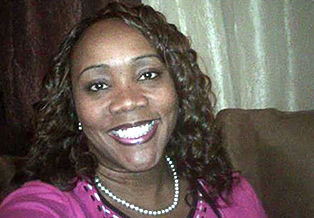
  • Meet Your GED® State Relationship Manager: Adora Beard
    By GED Author

    My days are very unconventional, as mainly particular issues that arise within my portfolio of jurisdictions will drive it. My focus is to fully understand state requirements and to be in constant communication about the efficacy of the program. I enjoy the “toggle” of representing the GED Testing Service, while simultaneously giving voice to a jurisdiction’s unique utilization of the GED program. If there are any issues, then I follow up with the relevant teams to make sure that we all understand the state’s rules and regulations and to ensure that the problems are resolved.

    I always say that in order to do my best work, I must be among those that roll up their sleeves and get the job done. In keeping with that, you will find me in the midst of Alabama, Connecticut, Idaho, Maryland, Michigan, Michigan Prisons, Rhode Island, and the U.S. Virgin Islands.

    How long have you been working with GED Testing Service?

    I have been working with GED Testing Service for 25 years and it continues to be a remarkable journey, indeed!!

    What do you enjoy most about your job?

    I love seeing our partners reach state program goals and being a part of that story. I see myself as a trusted advisor and it is exciting every single time we deliver new features or system enhancements that help jurisdictional programs make good on promises made to their students.

    What kind of work did you do before coming to GED Testing Service?

    I have worn many, many hats throughout my lengthy career! Finance, administration, and management remains the baseline of my career. Meanwhile, along the same trajectory as the job that I have now, I have worked with the American Council on Education’s former External Diploma Program and prior to that the Council for International Exchange of Scholars’ Fulbright Program.

    Where is your hometown?

    I consider Silver Spring, Maryland my hometown because it is the place that I have lived the longest. I’m a “Navy brat” and come from a military family.

    Favorite travel spot?

    Malta – A jewel of a place that both humbles and inspires me upon every visit.

    Ocean City, Maryland – Good old fashion fun that brings pure joy to my family and closest friends!

    What kinds of hobbies and interests do you have outside of work?

    I LOVE music! All music soothes my soul and has a purpose in my life. The genre is of no consequence, it just has to be good music. Some days I need the music and some days I need the lyrics. I am also a novice motorcycle and classic car enthusiast.

    If you were stuck on an island what three things would you bring?

    A knife, sheet music, and a whole lot of faith.

    What was your favorite toy as a child?

    My parent’s old high-fidelity vinyl record player and I was the best D.J. on the block.

    Who is the best teacher you ever had? Why?

    My son. There are no instructions for when you first become a parent. Important lessons are taught along the way and he was a patient teacher.

    What are two things still on your bucket list?

    I would love to get the old band back together (I was the lead singer in a band during my early twenties) for one more gig! Even if it is just in my small garage.

    I still dream of having my very own motorcycle and of course, it’s going to be a Harley.

In Session Educator Newsletter