• Interview: Corrections Educator Rebecca Deierling
    By GED Author

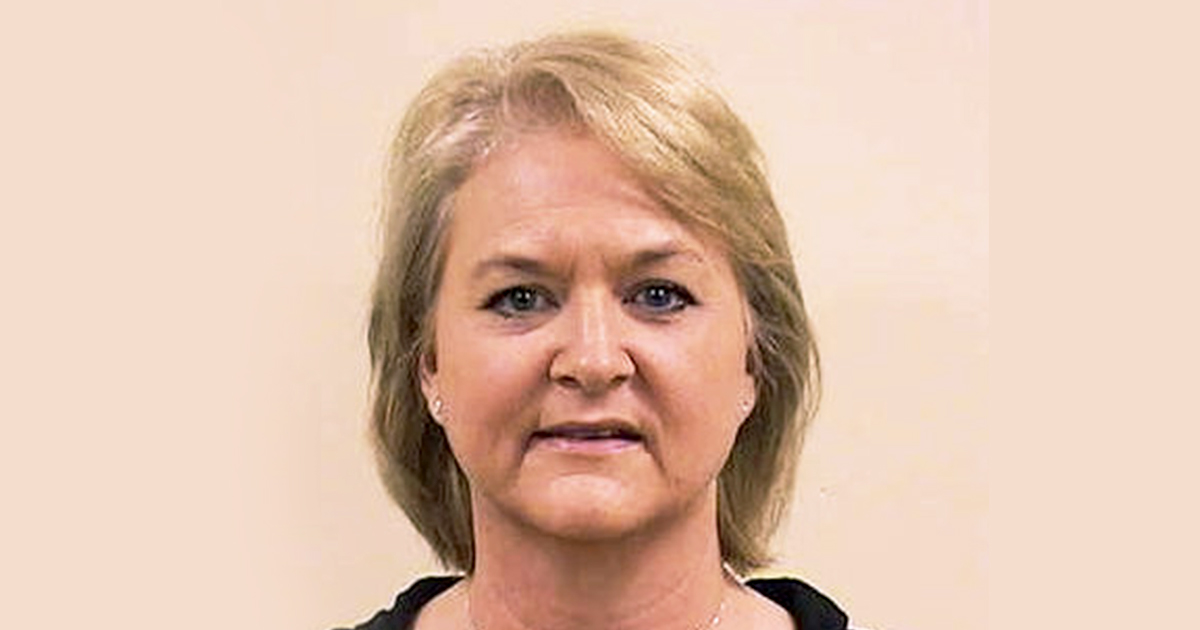
    Rebecca Deierling, a corrections educator with the North Dakota Department of Corrections, shares her experience working with incarcerated GED students.

    Can you tell me what your title is and the work you do with the North Dakota Department of Corrections?

    I am a GED instructor at the North Dakota State Penitentiary and I teach Science, RLA, Social Studies, Civics, Read Right and Creative Writing. Each of the classes are designed to prepare the students for the GED test.

    Can you tell me more about your background in adult education?

    I have a degree in Criminal Justice and Social Science Secondary Education (two Bachelor’s degrees). I previously taught at a traditional high school before coming to adult education and corrections three years ago.

    Congratulations on your recent award (North Dakota Adult Education Teacher of the Year), how do you feel about receiving this recognition as an educator?

    I was really honored and really excited, it wasn’t expected. It’s really humbling, I share this award with everyone I work with. Corrections can be a really hard place to work at times.

    One of the things I got the award for was project-based learning and other innovative ideas—and that’s because I have staff that allow me to do great things in the classroom. Sometimes you have to be more creative because of the restrictions that you’re faced with on a daily basis.

    How does your work in corrections differ from your other teaching experiences?

    There are a lot more security things you go through just to get to work and you work year-round because we’re not on the traditional academic calendar.

    The biggest difference between my corrections students and traditional high school students is motivation. In (traditional) high school you go to school and get good grades because your parents tell you to and that’s what is expected.

    In adult education you are doing it because you want to and you know the importance of it. The students are working for themselves—their accomplishments and victories mean so much more to them.

    A lot of them say when it comes to education they feel great, like they’re a real person and not in prison. Many of them didn’t have people who believed in them and they didn’t believe in themselves. I do find this more rewarding than working in a traditional high school environment.

    What are some of the challenges you face working in corrections? How are you working through some of the instructional challenges?

    The biggest obstacle is the internet, they have iPads with downloaded information but they can’t look up things and do online research. I print off things for them but some of them will not know how to find false news and stuff like that because they aren’t having that experience with using the Internet.

    When we’re dissecting (for science class) we can’t have scalpels. As an alternative, when we studied pollination we dissected worms, plants, bumblebees and grasshoppers. We did this without using sharp objects and we have microscopes for them to look closer.

    I think hands-on learning is the best way to learn. My class was learning about pollination and wanted to learn more so we started a garden here, they are super proud of their garden. They take so much pride in what they have created and we eat the food that we grow and donate to others.

    They are excited about the projects we’re doing. Something as simple as making homemade ice cream they loved it and asked for the recipe and directions and wanted to share with their children. Last year when it was cold outside we blew bubbles to see them freeze.

    Do you have any current GED students or former students that were memorable? Why?

    I had a guy in his late 40’s that had a rough life, didn’t care about education, didn’t want to be here, wanted me to exit him from the classes and he didn’t want to test. I finally got him to test and he passed. He screamed and jumped up and down and ran out immediately to call his wife and tell her.

    How important do you think the GED program is for the corrections population? Have you noticed changes in your students once they have started studying for the test?

    There are many statistics and facts that say getting your GED lowers the recidivism rate. We have some guys that have never filled out an application or a resume so we take them to a job fair and we actually hold one here in the facility.

    We also have a welding program and any opportunity to better themselves is welcome. It boosts their confidence so much, a lot of them had a bad upbringing and they never had anyone believe in them.

    What do you enjoy most about the work that you do?

    I know test day is my favorite day, I think I get more excited than the guys do when they take their test.

    They want to know their results so I make sure I bring the results to them. Many times I’m waiting outside their door and I’m jumping up and down for them.

    There are some people that might not pass but you don’t give up on them, you get their writing skills up, you can learn to fill out an application better, look for ways to improve them. They like coming, they like learning, they like trying. Some need smaller goals and you work with them to achieve that.

    What is your advice to other educators working with students in corrections?

    Just keep doing what you’re doing, it takes a certain type of person to work in this environment.

    Know that you’re making a huge difference. Any teacher that works in corrections and other adult education teachers are giving so much back.

    Most people in GED classes probably didn’t do well in the traditional classroom, look for the fun stuff you need to do to help each student.
  • Helping Adult Education Programs Elevate Their Students
    By GED Author

    Daquanna Harrison is the founder of the Elevation Educational Consulting Group, an organization created to help adult education programs empower their educators and further support student success.

    Could you tell me more about your organization and your role?

    The organization is called Elevation Educational Consulting Group (EECG) and it’s been rolling since 2016. It came from a vision after seeing really great educators and how they were attached to adult ed and didn’t have an avenue to affect change in the field. People were building curriculums but weren’t well known, especially those working with small programs.

    A lot of the work in the adult ed realm is professional development (PD), that’s everything from supporting PD content and understanding best practices and getting that info out to smaller organizations. We even post articles and we know that a lot of small orgs don’t have a means to find out about what’s going on. It really depends on what they need, that sometimes means we develop a PD plan and help their teachers get into teaching and learning from that.

    How do you work with adult education programs and educators?

    I have close to 15 years of being in adult education. I have been in programs as small as just me (going to libraries) to having $75K and a computer room. I really understand the range of program budgets. One of the biggest focuses for us is at the educator level, a lot of places focus on the student.

    When the test changed in 2014, when the teachers got over their fears about it, the students started to be successful.

    What’s your background in adult education and education in general?

    My passion is helping teachers become great administrators and great trainers.

    My first adult ed job was with the Department of Education Services in Washington, DC. I took the CASAS book and it was my job to find out what the students coming in really needed.

    A lot of my adult ed life occurred in DC, I helped support a community based organization that was almost 100 percent volunteer and Americorps members. We took that and built an adult ed charter school and went from volunteer to a paid staff.

    I started forcing my staff to present, I realized that many educators were reluctant to teach other educators, they experience impostor syndrome, we have to figure out a way to change the feeling that the nontraditional path to teaching in adult ed makes someone less qualified.

    What do you think are the biggest challenges facing adult educators and adult education programs?

    I think the challenges are what makes great programs strong. Adult ed came from the idea of “be everything” for your students, we can no longer do that, we have to have partnerships—it can be at the student or educator level.

    Programs really need to be prepared to have students understand the skills they need to have to get a job.

    It’s also understanding that adult ed is changing, you don’t necessarily have to change but find partners that are already doing that.

    How does your organization work with the GED test program?

    When I’m supporting other adult education organizations I advise them to utilize the tools that are available and I help programs understand when students are ready for independent exploration and when they should incorporate that (resource) in class.

    What work are you doing to bridge the gap between adult education students and workforce development skills?

    A big piece to make sure students are work force ready is helping programs understand what workforce ready means, there’s a difference between workforce ready and career exploration.

    Career changer is different from a student that doesn’t have a lot of experience, unfortunately often the programs have a one-size-fits-all approach. We teach programs to make it specific to their students.

    What are your tips for adult education programs?

    Partnerships—you need four types of partnerships: those that refer learners to you, those that keep your learners, those that strengthen your learners and those you should be referring your learners to

    Empower and develop your educators—use the tools that are already out there, too many times programs are trying to recreate the wheel, find your star teachers and allow them to showcase what they’re doing in the classroom

    Understand your learners and train and hire for that—if you have a certain type of population, be cognizant of them and shifts in populations, your data people and teachers should be meeting, data can tell teachers what they see and how they can adjust.

    Learning something new is so hard the first time and then it becomes easy, we are all adult learners and we have to remind ourselves of that.

    Daquanna Harrison is also the Vice President of the Maryland Association for Adult, Community and Continuing Education (MAACCE) Board of Directors. She can be reached at dharrison@elevationed.com

  • Ask GED Testing Service
    By GED Author

    What is the best way for students to request transcripts and duplicate diplomas?

    On the updated GED.com website we have a webpage dedicated to “Grads and Transcripts” with information related to transcript requests. Students that earned their credential in 2014 or later can log into their GED.com accounts and request their transcript.

    Students that earned their GED credential before 2014 will need to select the country and state they resided in when they earned their credential and the site will connect them to the appropriate credentialing service.

    Some states/jurisdictions only allow graduates to order a transcript; others may offer diplomas and certificates too.

  • Ask GED Testing Service
    By GED Author

    What is the best way for students to request transcripts and duplicate diplomas?

    On the updated GED.com website we have a webpage dedicated to “Grads and Transcripts” with information related to transcript requests. Students that earned their credential in 2014 or later can log into their GED.com accounts and request their transcript.

    Students that earned their GED credential before 2014 will need to select the country and state they resided in when they earned their credential and the site will connect them to the appropriate credentialing service.

    Some states/jurisdictions only allow graduates to order a transcript; others may offer diplomas and certificates too.

  • Ask GED Testing Service
    By GED Author

    What is the best way for students to request transcripts and duplicate diplomas?

    On the updated GED.com website we have a webpage dedicated to “Grads and Transcripts” with information related to transcript requests. Students that earned their credential in 2014 or later can log into their GED.com accounts and request their transcript.

    Students that earned their GED credential before 2014 will need to select the country and state they resided in when they earned their credential and the site will connect them to the appropriate credentialing service.

    Some states/jurisdictions only allow graduates to order a transcript; others may offer diplomas and certificates too.

  • Connecting the GED Student Personas to your Adult Learners
    By GED Author

    Through ongoing research we have identified common behaviors, motivations, and attitudes among GED students. These student types, or personas, can be grouped into four categories.

    Through research with tens of thousands of adult learners and GED program users over the past two years, we have found similarities among learners that we are using to shape our interactions with them. Here at GED Testing Service we have used this information to develop messaging that encourages students to pursue or continue testing.

    This can be found in the new GED.com experience for students and the GED.com website updates. The new account experience has raised the likelihood of students persisting to take a GED test by roughly 4%. It is our goal to identify the challenges our test takers face and provide supportive ways to meet each student’s studying and testing needs.

    Here are the four different “mindsets” alongside several identifying characteristics:

    Determined— “I WILL The GED is my first step to success”

    Even the most determined student can hit obstacles, so encouragement is still valuable. This persona also needs the benefit of well-target study aids: everything from how to study through what to study can be useful.

    Family Go-To— “I CAN I need my GED, it’s so important!”

    This persona has a strong desire to be a good person and to do good in the world — but has seen being available to her/his family as the only way to do that. Help this persona see a bigger vision of how they can do good in the world, and for their family, with the GED.

    Disheartened—“I’LL TRY I want my GED, but can I do it?”

    This persona needs hope, especially hope that she/he is able to change. That takes the growth mindset and self-efficacy. Help this persona see that every hero experiences failure and setbacks, and overcoming those ordeals is part of the victory.

    Here and Now—“I WILL… later The GED will always be there.”

    While everyone is affected by the context around them, this persona will especially benefit from a context that encourages consistent actions in the right direction. That context can come from a positive social group, a structured study tool, or automated messaging.

    Identifying similarities between the personas and your students can help you develop and implement classroom instruction that motivates and accounts for the different ways students may approach the GED testing journey.

    The full chart with detailed descriptions of each persona can be downloaded here.

  • Postsecondary Credentials and GED Graduates
    By GED Author

    Postsecondary credentials are helping GED graduates meet the growing demands of the job market, while helping stimulate the American economy.

    According to research from The Brookings Institution the average bachelor’s degree holder contributes $278,000 more to local economies than the average high school graduate through direct spending over the course of his or her lifetime. An associate degree holder contributes $81,000 more than a high school graduate.

    This data supports the growing number of GED graduates seeking and earning postsecondary credentials to enter the workforce. We have found that since the launch of the 2014 test, 2 out of 3 GED graduates express interest in attending college. These graduates aren’t just interested in college, they are acting on their aspirations. GED grads are entering college programs at a higher rate than in the past. With more than 35% enrolling in a college program within a year of earning their credential, and at least 41% enrolling in college within two years of earning their credential.

    Higher education is directly linked to increased earnings and more economic activity, further stimulating the local, regional and national economy. GED graduates recognize the correlation and are increasingly pursuing opportunities to upskill and enroll in higher education institutions.

    In a recent survey of over 4,000 GED graduates that earned the College Ready (CR) score levels, we found that 57% of CR GED grads plan to earn a four-year degree from a college or university and 29% plan to earn a certificate or associate degree from a two-year program.

    We also found that 71% of CR GED grads are currently employed in a number of fields including positions with for-profit and non-profit companies and jobs in the healthcare industry, military and government.

    High school graduates on average earn $9,000 more each year than their non-graduate counterparts and high school dropouts cost the economy $1.8 billion in lost tax revenue annually. Earning a GED and a postsecondary credential also equips graduates with the skills needed to meet the demands of the current workforce. Over 50% of U.S. jobs are middle skill jobs with only 44% of workers qualified to fill these positions. These middle skill jobs require at least some postsecondary education and training, but less than a 4-year degree.

    According to the Georgetown Center on Education and the Workforce there are 30 million “good jobs” available in the U.S. with median salaries around $55,000 for people without Bachelor’s degrees. Many of these “good jobs” are middle skill jobs that can be found in the hospitality, healthcare and finance sectors.

    The need for GED graduates with postsecondary credentials will only continue to grow as millions of middle skill jobs are created and others remain vacant.

    More information about GED graduates and college readiness can be found here.

  • “Treat Yourself” to Over 50% Off GED Ready Tests
    By GED Author

    No tricks, just treats with this month’s GED Ready promotion for students!

    Starting October 15, students can take advantage of this un “boo-lievable” deal and purchase GED Ready subjects for $2.99 each— $11.96 for all four subjects.

    “Witch-ever” option they choose, students can purchase the GED Ready subjects through their GED.com accounts and the GED Marketplace using the code: TREATYOURSELF

    While ghosts, ghouls and goblins may stir up a fright, please hurry this promo expires Halloween night!

  • National Numbers Rise for Corrections Testing
    By GED Author

    During 2017, the number of testers in Corrections facilities grew nationally. Here’s a look at the numbers:

    2017 Corrections test takers: 59,776, this is an increase from 48,164 in 2016 (an increase of 24% from the prior year)

    2017 Corrections pass rate: 78%

    Top ten jurisdictions meeting or exceeding the national pass rate of 78%:

    Hawaii 95%

    Illinois 93%

    South Carolina 90%

    South Dakota 90%

    Minnesota 89%

    Colorado 88%

    Oregon 87%

    Nebraska 87%

    North Dakota 87%

    Alaska 87%

    Congratulations to the educators and staff who have worked so hard to help Corrections students achieve success, and congrats to the top 10 states with outstanding pass rates!

    Through the end of the year we will be sharing more information and news about Corrections testing as part of a larger campaign to bring visibility to the great outcomes related to the GED credential–both inside and beyond Corrections.

    We encourage you to continue to share your stories with us and explore the GED.com webpage dedicated to GED Corrections test preparation and administration.

    *Article was updated on 10/17/18 to clarify that only the number of Corrections testers increased in 2017.

  • Trick or Treat: Mining GED Ready Score Reports
    By GED Author

    Are you or your students—for that matter—“spooked” by GED Ready score reports?

    Are you thinking of score reports as “TMI” (too much information)? Not specific enough? Generic? If you are not mining score reports for insights to take your students to the next level, you are missing out on a strategy than can produce solid results.

    In this webinar, we won’t focus on the “Likely to Pass” (Green Zone) students or those who are “Not Likely to Pass” (Red Zone). We’ll take a look at student score reports that are in the “Too Close to Call” category or the Yellow Zone. Students who score in the Yellow Zone are most likely to gamble and interpret “Too Close to Call” as an invitation to roll the dice. They will insist that they are ready and sometimes that may be true but more often than not, they will be just outside of the passing zone. Our mutual goal is to help as many students as possible be successful in their first attempt. Often that means digging into the score reports to uncover what they need to brush up on BEFORE they tackle operational testing. The GED Ready test is a strong predictor of performance and when combined with other tools like the High Impact Indicators (HIIs) and the Performance Level Descriptors (PLDs), you and your students have powerful tools to raise the probability of success.

    Join us for the October installment of Tuesdays for Teachers, “Trick or Treat: Mining GED Ready Score Reports,” to experience score reports in a whole new light. Are you ready to meet the challenge of thinking of GED Ready score reports as a very detailed prescriptions for improving student skills? Like the haunted house on Halloween—we dare you!

    –Daphne Atkinson, Senior Director of State Relationships for GED Testing Service

  • New School Year, New Opportunities for GED Students
    By GED Author

    The new school year can be an exciting time for many adult learners entering the classroom and a fresh start for others continuing their GED journey. Every fall there is much abuzz about students returning to school with much of the focus on traditional K-12 and college students, but those of us in the adult education community know it’s an equally important time for GED students.

    This time can also be intimidating for adults who left school many years ago and want to re-enter a classroom setting. For many programs this means meeting students “where they are” and engaging them in a way that eliminates some of the intimidation with school enrollment. This is a great time for programs to hold back-to-school night and attend community events where instructors and coordinators can meet face-to-face with prospective students.

    Sharing student success stories is a powerful way to connect with adult learners. Highlighting graduates of your program through local, print and broadcast media adds a personal connection to the hard work and perseverance of GED students. This works well in conjunction with advertising your class offerings and schedule in local print and broadcast media. Social media is also a powerful advertising tool for showcasing your classes, sharing these graduate success stories and actively engaging with interested and current students.

    This presentation from our annual conference reviews successful marketing campaigns GED Testing Service has done and provides tips on how local adult education programs can apply our findings to help with student recruitment. Some of these strategies include:

    • Use GED Analytics and data to identify your demographics and identify the best ways to reach your target student population
      • Younger students may be more likely to seek information via social media, older students via traditional media
    • Utilize paid, earned and owned media to increase the visibility of your program
      • Paid – print, tv, radio and direct mail
      • Earned – press mentions, reviews and social media mentions from others
      • Owned – program website, recruitment events and social posts from program accounts
    • Set objectives, develop appropriate messaging and determine how you will evaluate success
      • Recognize challenges and opportunities unique to your program
      • Determine what metrics define success for your program

    GED Testing Service has also created posters in English and Spanish that can be displayed at your adult education program and/or test center to promote the GED test.

    If you have other ideas for promoting adult education classes and recruiting GED students we encourage you to share them in our Facebook forum for adult educators.

  • Changes Coming to the RLA Test Screen & Score Reports
    By GED Author

    In “Changes You’ve Been Asking for: The RLA Test Screen & Score Reports,” our professional development and assessment teams discussed the format changes in the RLA test that students will see in 2019.

    Over the last few years many educators and students have given us a great deal of feedback related to the RLA test interface and suggested changes. In the webinar we reviewed the following upcoming changes to the test:

    • The response box will be greatly enlarged on the right-hand side of the display. Students will be able to view, write and edit their response more easily.
    • The instructions will be reformatted and made clearer on the left-hand side of the display. The instructions have not changed, but the information that is accessed by clicking on the “ER Answer Guidelines” will now be more accessible as part of the instructions.
    • The instructions will appear with selected words in bold type. When a student reads only these bolded words, they can still understand the task.
    • These enhanced instructions will also appear on all accommodated tests, GED Ready® and Spanish tests.
    • The reading material which is currently presented across multiple tabs will be presented in one tab that students scroll through. There will now be just two tabs on the left-hand side of the display: one tab for the revised instructions, and a second tab for the reading material.

    The webinar also presented ongoing research that will improve the usability and effectiveness of the GED score reports based on a two-phase research study we launched in 2017. In the first phase we looked at how educators and students understand and use the score report and we used these findings to build prototypes. In 2019 we will research if these prototypes work for both educators and students. After a number of reviews we will conclude with the last usability study.

    Here are a few examples of our findings from the research:

    • Revise language to make the reports easier to understand including:
      • Skills/indicators in “How to Score Higher”
      • Information provided in “What Does My Score Mean”
    • Update the study plan including:
      • Sorting the study plan by page numbers in the book
      • Printable version with margins that allow for hand-written notes

    The full presentation and a downloadable pdf are available here.

In Session Educator Newsletter