• PD Recap: Bridging the Generational Divide in the Classroom
    By GED Author

    In our latest Tuesdays for Teachers webinar, we shared tips for helping students of all ages in GED classes.

    During “Bridging the Generational Divide in the GED Classroom” our professional development team presented strategies to boost instruction for students from different generations and diverse learning styles.

    The webinar highlights techniques to maximize learning based on each student’s unique style:

    • Learn the difference between pedagogy and andragogy.
    • Explore how your students’ classroom experiences stack up in the learning pyramid.
    • Help each student discover his or her learning style, how they absorb knowledge best and their unique approaches to problem-solving.
    • Customize your instruction so that visual learners, kinesthetic learners and auditory learners can get the most out of each lesson

    The webinar also dives into differences and synergies among generations of adult learners:

    • The “Greatest Generation,” also known as the “GI Generation,” was marked by World War I and the Roaring Twenties.
    • “Traditionalists,” also known as the “Silent Generation,” lived through the Great Depression and World War II.
    • “Baby Boomers” or “Boomers” saw the first landing on the moon and went through the Civil Rights movement.
    • “Generation X,” often dubbed “Baby Busters” saw the Berlin Wall come down and the Challenger explosion.
    • “Generation Y,” more commonly referred to as “Millennials,” went through the onset of the social media revolution and grim events such as 9/11 and a series of school shootings.
    • “Generation Z,” or “iGen” grew up with technology and are sensitive to the effects of global conflict, including terrorism weighing on home territory.

    Another interesting point covered in the webinar is how people remember information, wherein the Ebbinghaus forgetting curve is explained. Did you know that the human brain remembers only 40% of knowledge acquired within just a few days of learning it? That’s why it’s so important to review information and practice skills in order to reinforce knowledge.

    Resources to increase classroom engagement, including slides and printable worksheets, are also available for download. Catch up on the webinar recording today.

  • GEDTS 2020 Annual Conference Early Bird Registration
    By GED Author

    There’s still time to register at the discounted rate for the biggest GED event of the year!

    This summer, the GED Annual Conference will come to life in Atlanta, GA from July 27th to 29th.

    Here’s just some of what you can expect at this year’s event:

    • Workshops with the experts,
    • Innovative teaching and testing techniques,
    • Networking with peers,
    • Student awards and more.

    Take advantage of discounted pricing through March 31st for registration at $445. On April 1st, the rate goes up to $495. Your ticket includes two breakfasts, one lunch, an evening welcome reception as well as attendance for all conference events.

    Register today and check out highlights from previous sold out events.

  • The Minnesota Department of Corrections-Faribault Graduation
    By GED Author

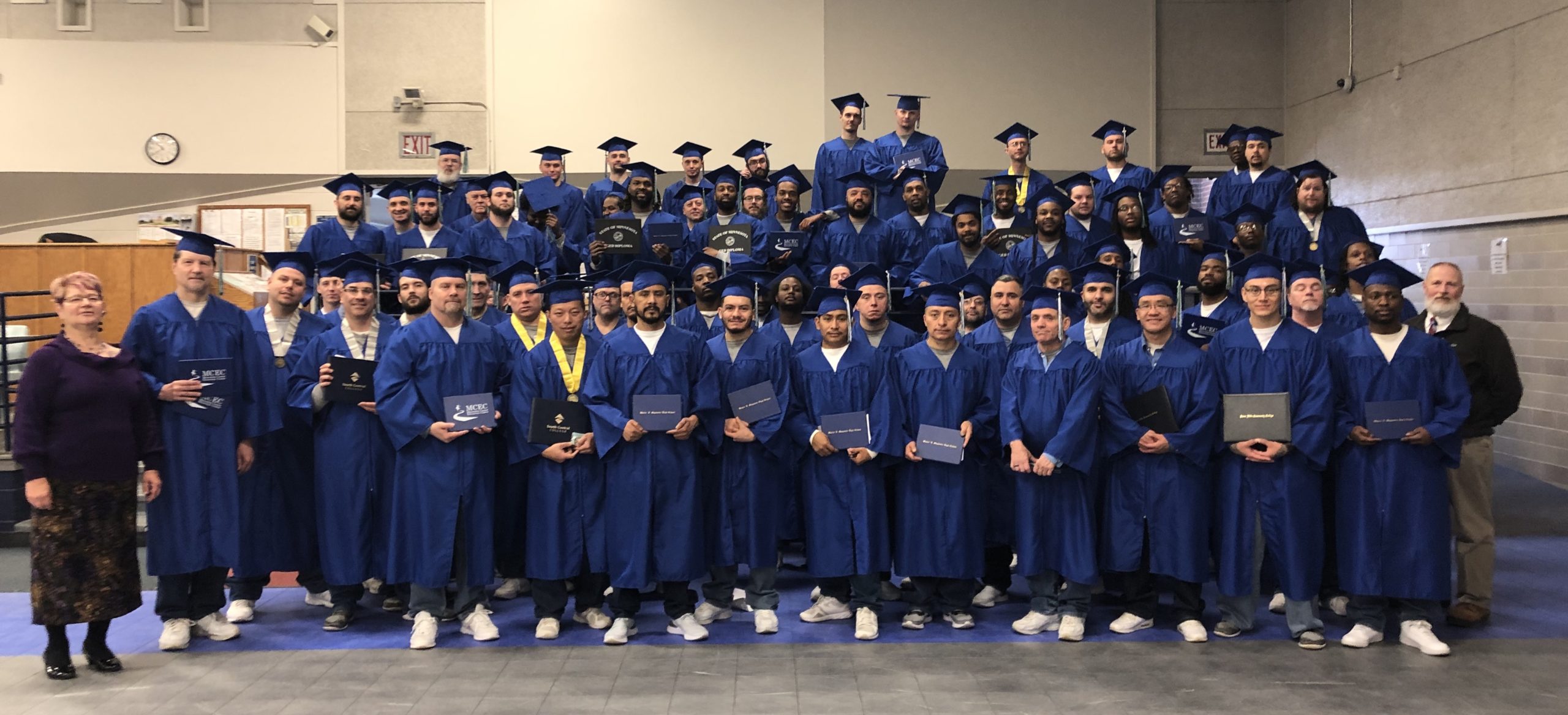
    Congratulations! On Friday, January 10th the Minnesota Department of Corrections-Faribault recognized 125 graduates at its 109th graduation celebration.

    The graduates were recognized for earning GED credentials and completing vocational training programs. The additional programs included Heavy Equipment Operation, Carpentry, Cabinetmaking, Introduction to Computers, Drywall, Microsoft Office Specialist programs and more.

  • Virgin Islands Adult Education Conference
    By GED Author

    In January, GED Testing Service attended the State Office of Career, Technical & Adult Education Conference held in St. Croix, U.S. Virgin Islands.

    The conference theme educate, lead, and succeed in adult education brought instructors from the Islands of St. Thomas, St. John, and St. Croix districts. GED State Relationship Manager Adora Beard led GED program training sessions focused on instructional strategies and diverse platforms of resources across GED content areas to help educators prepare students for success on the GED test.

  • President’s Corner: Our 2020 Vision
    By GED Author

    Welcome 2020!

    Last year was full of change, opportunity, and reflection. Now, we’re excited to start this new year motivated by our continued mission to support adult learners as they write the next chapters in their lives.

    We recognize the important role the GED credential has in improving the trajectory of the lives of GED graduates, their families and the larger community. It is our mission to provide a pathway to success that in turn embraces the uniqueness of each of our students, representing a wide range of different groups, identities, backgrounds and ideologies.

    At GED Testing Service we are dedicated to finding and creating solutions for adult learners in an effort to ensure that a high school equivalency diploma is accessible and valuable. As I enter my first year as President and my eighth year with the company, I have spent time thinking about what we’ve done well, how far the GED credential has come, and the work we still have to do.

    As the leader of this unique organization, I have challenged myself and others to think about how we can impact more lives. This brings many questions to mind: How do we reach students that we have not had access to? What can we do differently? What is stopping us from helping every adult learner that needs their GED credential?

    I ask these questions recognizing that we work closely with adult educators, community organizations, researchers, policymakers and students, to identify the barriers that prevent students from becoming GED graduates. The answers to these questions are the many opportunities that each of us has in 2020.

    We will continue to be a student-first organization where we value and prioritize the needs of our students and support the educators that prepare them for the test, higher education, and life. Our research and studies will remain focused on what we can do to provide insightful resources, products and training to give students and educators the tools needed for success.

    We are a growing community of GED graduates, students, educators, family members, friends, colleagues and much more. We each have our own story and our own “why.” Our story tells who we are and it is essentially what connects each of us despite our differences. It doesn’t matter where we come from, or what our past says about each of us—our experienced adversity and diversity should be celebrated and embraced.

    As we move forward in this new year, I encourage us all to use our past experiences, challenges, and triumphs to motivate us as we support others and help make the world a better place.

    Vicki Greene, President of GED Testing Service

  • New Year, New Professional Development
    By GED Author

    Each year we put together professional development workshops and webinars to help educators prepare students for the GED test subjects.

    The adult education community is a huge part of the success of the GED test program and we are excited to kick off a new year with a full lineup of classroom strategies, teaching tips and resources to help your students gain the confidence and skills they need to succeed.

    One of our professional development focus areas this year will be instructional transitions:

    • ABE to GED level instruction

    In program year 2018, approximately 1.4 million adults enrolled in programs across the country: approximately 17% ASE, 43% ABE and 45% English Language Learners. These percentages have held steady over the years. Students who possess Adult Secondary Education (ASE) skills are in the minority. A much larger percentage of students function at the upper levels of Adult Basic Education, i.e., Pre-GED.

    During 2020, a significant focus for professional development will be on helping teachers identify ways they can move students more effectively and efficiently from adult basic education to a GED level and on to passing the GED test.

    • From Passing to College and Career Readiness

    The Workforce Innovation and Opportunity Act (WIOA), Title II funds are tied to program performance. Over the years, a greater emphasis has been placed on students earning high school credentials, entering postsecondary education/training, and attaining employment.

    During 2020, professional development will be provided in areas within Mathematical Reasoning and Reasoning through Language Arts that will enable students to earn higher scores on these tests. Providing teachers with higher level content will enable them to help students earn the scores necessary to avoid remedial classes and focus instead on credit earning courses.

    Professional development offered in 2020 will also focus on the evolution of the GED classroom:

    • Engaging students in the learning process

    Approximately 30% of all adult education students range in age from 16-24. An additional 50% fall into the 25-44 range. These two groups represent three different generations: GenZ, Millennials, and GenX. The remaining 20% of students fall into the Baby Boomer generation. Each generation has its own preferences for taking in and processing information. Each generation has unique needs in how they prefer to work within a classroom.

    During 2020, more emphasis will be placed on how to adapt specific instructional strategies to meet the learning preferences of students from different generations.

    • Bringing in new resources

    Tuesdays for Teachers’ attendees often request information on resources (English and Spanish) to use in the classroom.

    Throughout the coming year, more attention will be devoted to showing teachers how to connect to and use resources found on GED.com, as well as other resources such as GED Live, GED Flash and other study and preparation tools. In addition, each webinar will include a segment on instructional resources that are free or low cost that focus on the content covered during the webinar.

    Last but certainly not least, we will be on the road presenting professional development at national conferences including the COABE 2020 Conference and the 2020 GED Annual Conference.

    This year’s GED conference will be held at the Atlanta Marriott Marquis from July 27th to 29th. Our conference will offer opportunities to access the latest professional development, resources and program enhancements GED Testing Service has to offer. Registration is now open with discounted rates.

    Thank you for all your support and we’ll see you on the road or online!

  • New Employers Offering GEDWorks
    By GED Author

    The GEDWorks program recently celebrated over 4,000 graduates earning their credential since the start of the program in 2015.

    What started as a pilot program with four employers has grown to include over 40 employers across the country helping their workers earn a GED credential at no cost.

    We recently had two new employers join the GEDWorks family—Ashby Ponds and UCare began offering the benefit in 2019. Ashby Ponds, a continuing care retirement community located in Ashburn, Virginia, is offering the GEDWorks benefit to employees. UCare, an independent, nonprofit health plan providing health coverage in Minnesota and western Wisconsin, is offering the GEDWorks benefit to members in 15 select counties.

    GEDWorks students are 81% more likely to earn their diplomas than students who are pursuing a GED credential on their own. Participants are given access to a personal advisor, online GED study materials, practice tests, connections to local adult education programs and free GED tests.

    Our current GEDWorks partners represent various industries including food service, retail, manufacturing, hospitality, media and transportation. Some of these employers include: Taco Bell, KFC, Pizza Hut, Sheetz, Texas Department of Transportation, Benchmark Electronics, UGN, Solid Comfort, Total Wine & More, Bell’s Brewery and Southeastern Grocers (BI-LO, Fresco y Más, Harvey’s and Winn-Dixie).

    A complete list of GEDWorks employers and graduate success stories can be found at GEDWorks.com.

  • Did You Know? Five Facts about GED Testing Service
    By GED Author

    Here are a few interesting facts about the GED test program:

    The GED program has a strong connection to U.S. space exploration

    The scientist and astronaut who has flown in the most shuttle missions, and the most time in space (Story Musgrave) was a GED grad. Also, a senior test engineer on the first space shuttle and engineer on the Gemini and Apollo space missions was a GED grad, and his daughter works at GED Testing Service as a State Relationship Manager today.

    The GED program has the largest alumni group in the world

    There have been more than 20 million GED graduates since its inception in 1942. Grads have gone on to every walk of life, including: Ambassadors, U.S. Surgeon Generals, world-famous athletes, entertainers, and entrepreneurs.

    The GED test was given in almost 90 countries, outside of the U.S. in 2019

    The most recent country to open a test center to serve GED students was Namibia. And most recently Pakistan approved the GED credential formally for acceptance into local universities.

    More than 225 colleges and universities across the U.S. use the GED/ACE College Ready or + Credit score levels

    These score levels allow GED grads to bypass placement exams, skip remedial education courses, and in some cases walk in to college with credits based on their GED scores.

  • GED.com Demo Site Now Available for Educators
    By GED Author

    We’re excited to announce a new tool for educators and others who help students sign up for GED.com accounts.

    We have just launched the GED.com account demo site that allows you to sign up for a demo GED.com account.

    Why is this helpful? If you’ve ever wanted to demonstrate for your classes the GED.com account set-up, you’ll know that it can be a pain to sign up for a new account that requires a unique email address each time. We know many of you have created Gmail accounts just to sign up for GED.com accounts.

    In addition, most teachers have a GED.com account they use to see the system, receive email alerts, etc., but occasionally the GED.com account experience will change slightly for new test-takers and it impossible to see the new features/look without setting up a new account. This demo site erases most of these common annoyances.

    How you can take advantage of the new GED.com account demo site in two easy steps:

    Step 1: Navigate to the website link below.

    https://demo.ged-cloud.com/login

    *When you go to the site you may see a warning stating “Your connection is not private.” You will see this because it is a demo site and not a public-facing website. Please click the “Advanced” button and proceed, you should only have to do this once.

    Step 2: Sign-up for a GED.com account—just like you would on GED.com.

    A few things to remember:

    • You can use a real or “fake” email account and password when you sign-up for a demo account
      • Example: You could use “newstudent123@gg.com” or “signmeup@123.com”. As long as the email address follows a standard email address format, they can type anything they want.
    • You can sign up for accounts as many times as you want
      • Example: If you have three new classes you can demonstrate the account setup for each one.
    • None of the demo accounts you set up are real

    *You also have the option to log in with any student account you create. It is a good practice to use the same password for all the student accounts you create in the demo environment so you don’t have to worry about remembering it.

    We hope that you enjoy this new tool and streamlined way for you to demonstrate to your students how to set up a GED.com account!

  • Census 2020: Classroom Resources to Prepare Adult Learners
    By GED Author

    The 2020 Census is coming and adult educators have the opportunity to provide support and resources to help learners and their families prepare for the survey.

    Why It’s Important/ Dispelling Myths

    The goal of the census is to count every living person in the 50 states, District of Columbia and five U.S. territories. Adult educators are in a unique position to inform their students about the importance of the effort (it is required by law), how to participate and how it will benefit them and their families.

    By April 1, 2020 each home will receive an invitation to respond to a questionnaire—online, by phone or email. The 2020 Census will be the first year that responses will be accepted online and this is more reason why there are increased efforts to help people avoid scams and frauds.

    You can help students become more comfortable with the census and what it will ask by sharing the actual set of questions available here: https://2020census.gov/en/about-questions.html

    The questionnaire is confidential and the data is federally protected. Students will not be asked about their citizenship status and responses will not be used to identify individual homes or residents living in those homes.

    Supporting Adult Learners

    We do recognize that the Census collection process can be intimidating for learners, especially those with lower literacy skills.

    The National Coalition for Literacy has created a webpage dedicated to providing Census 2020 resources that address some of the unique concerns of GED and English Language instructors. The webpage has links to a number of guides, program toolkits and related news.

    Instructors can also incorporate Census data in classroom lessons by using available fact sheets and infographics. This may help students become more comfortable with how their responses will be used.

    Census Jobs for Students

    The Census Bureau is hiring thousands of people across the country to help with the collection efforts. This is a great opportunity for adult learners to earn extra income through a temporary job with flexible hours.

    Recruitment has started and is expected to continue through February 2020. Census takers make up the greatest number of available positions with some availability with clerical jobs and supervisory and outreach positions.

    The Census Bureau website has detailed information including qualifications for positions, pay rate by state and county, the application to apply and other frequently asked questions.

  • Interview: Brent Gerken, GED® Operations Manager
    By GED Author

    This month we’re highlighting our new GED Operations Manager Brent Gerken in our Q&A feature.

    How long have you been working with GED Testing Service?

    I joined the GED team on October 21, 2019.

    What will you be doing in your role as GED Operations Manager?

    The Technical Operations (Tech Ops) team plays a critical role within GED Testing Service. This team is involved in all facets of the company. This includes working with the State Relationship Managers in the field and jurisdiction Administrators—home and abroad. We also partner with our vendors and track analytics while working with development, computer and paper-based testing, Corrections, training, GEDWorks, and much more. My role on this team is to help resolve escalations, manage and improve processes, strengthen relationships and help ensure the team has what it needs to keep GED Testing Service running smoothly.

    What does a typical work day look like for you?

    For the first three weeks it’s been listening, asking lots of questions and applying what I learn to better understand all GED influencers and their roles.

    What do you enjoy most about your job so far?

    If being a part of a team that impacts the lives of so many people isn’t enough—it’s solving problems.

    What kind of work did you do before coming to GED Testing Service?

    Prior to GED Testing Service I worked for the Pearson Credential Management (PCM) division as a Technical Account Manager (TAM) for six years. Before that I worked 12 years at a healthcare reference laboratory that specializes in FDA-regulated testing.

    Where is your hometown?

    My roots and heart reside in Sac City, Iowa. It’s a small community of about 2,000 people with an abundance of personality and character. My graduating class size was only 40 students, but some of them I still consider my best friends today—which I think is rare.

    Who is the best teacher you have ever had? Why?

    All of my teachers throughout my life made an impact on me. My mother who was a 5th grade teacher (which made skipping homework difficult), my high school music teacher Mr. Rock who helped me discover and develop my natural talents and Mrs. Jones and Ms. Birkhofer who encouraged my creativity.

    Who (or what) have been your strongest influences in life?

    My parents, sister and my wife.

    Favorite vacation destination?

    So far the Grand Canyon but each year we explore a new vacation destination.

    What kinds of hobbies and interests do you have outside of work?

    Spending quality time with my wife and five kids. I also enjoy playing softball, coaching youth sports, golfing, reading and watching movies.

    If you were stuck on an island what three things would you bring?

    A water filter, an abundance of matches, and a sailboat with GPS and built-in mobile OnStar.

    What are two things still on your bucket list?

    Traveling and having lots of grandchildren.
In Session Educator Newsletter