

The Toughest GED Math Questions (and How to Solve Them)
The toughest GED® Math questions (And how to solve them)
Facing the GED® math test can feel daunting, but even the hardest problems follow predictable patterns. Once you know how to approach them, they become much more manageable.
This guide offers insights and strategies to confidently tackle the toughest GED math questions and explains how to solve them.
What makes a GED Math question “tough”?
Not all GED math questions are hard, but the toughest ones tend to share a few key traits:
Multi-step reasoning: You’ll often need to combine concepts like percentages, geometry, or algebra in real-world scenarios.
Word problems: These require translating real-life situations into math equations.
Interpreting graphs/data: Understanding what a graph shows is just as important as calculating.
Time limits: You’ll need to solve efficiently without rushing into mistakes.
How many questions are on the GED Math test?
The GED math test includes about 46 questions divided into two parts:
Non-Calculator Segment: ~5 mental math questions.
Calculator-Permitted Segment: ~41 questions with an on-screen calculator.
You’ll have 115 minutes total, so pacing matters just as much as accuracy. That’s about 2.5 minutes per question (115 minutes ÷ 46 questions ≈ 2.5 minutes). The questions vary in format, including multiple choice, fill-in-the-blank, and drag-and-drop.
Both calculator and non-calculator parts cover quantitative and algebraic problem-solving, common to all GED test subjects.
Practice GED Math questions (With step-by-step answers)
These aren’t real test questions—but they reflect the types of problems many test-takers find most challenging.
Practice question #1: Multi-step word problem
A store is having a sale. A jacket originally costs $80 and is discounted by 25%. After the discount, a sales tax of 8% is applied. What is the final price?
How to Solve It
Step 1: Find the discount → 25% of $80 = $20
Step 2: Subtract the discount → $80 − $20 = $60
Step 3: Add tax → 8% of $60 = $4.80
Step 4: Final price → $60 + $4.80 = $64.80
Answer + Key Insight
The final price is $64.80. Always apply discounts before adding tax.
Common Mistake:
Applying the tax first or combining percentages incorrectly.
Math tip: The GED test’s on-screen calculator has a % function. Make sure to use this, or you will need to convert your percent to a decimal before multiplying (i.e., 20% = .20 and 8% = .08).
Practice question #2: Solving an equation
Solve for x:
3x + 5 = 20
How to Solve It
Step 1: Subtract 5 from both sides → 3x = 15
Step 2: Divide both sides by 3 → x = 5
Answer + Key Insight
The correct answer is x = 5. Solve equations by getting the variable alone on one side step-by-step.
Common Mistake:
Forgetting to apply the same operation to both sides of the equation.
Math tip: Make sure to watch for sign errors. Always do the opposite operation to move something from one side to the other.
Practice question #3: Interpreting a graph
A graph shows a line passing through the points (0,2) and (4,10). What is the slope of the line?
How to Solve It
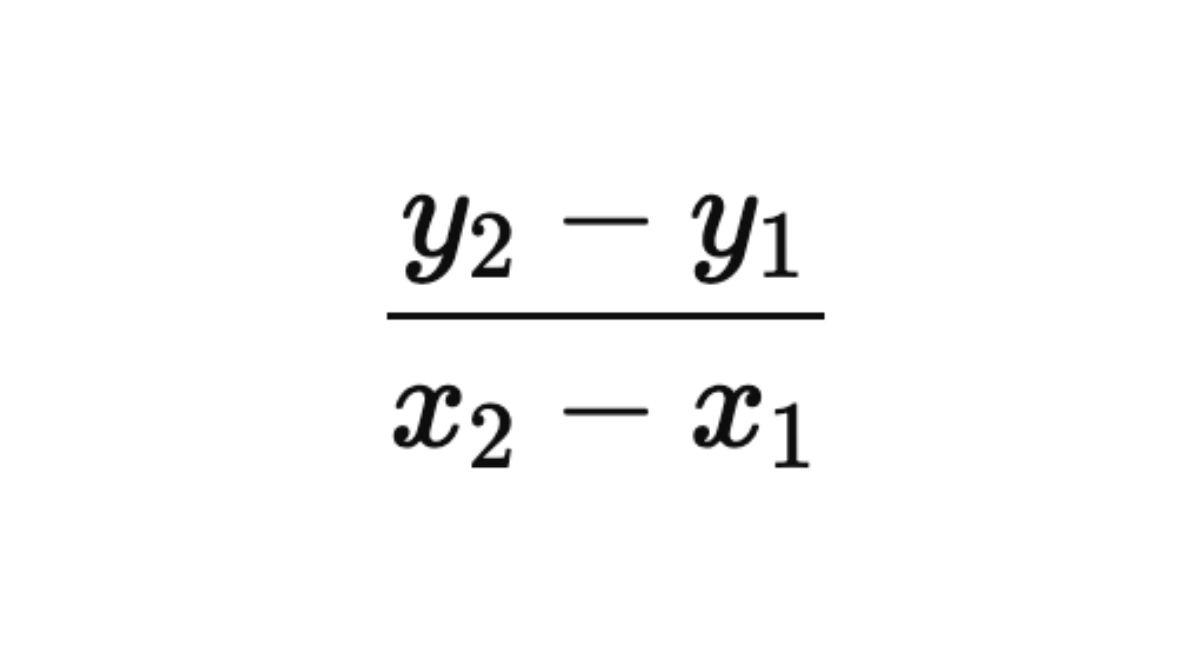
Step 1: Use the slope formula →
Step 2: Plug in values → (10 - 2) / (4 - 0) = 8 / 4
Step 3: Simplify → slope = 2
Answer + Key Insight
The slope is 2. Slope tells you how quickly the line rises.
Common Mistake:
Mixing up the order of subtraction or using the wrong points.
Math tip: Avoid swapping x and y. Remember: in an ordered pair like (4,10), the first number is always x and the last number is always y (i.e., x = 4, y = 10). It’s easy to remember because x comes before y in the alphabet.
Want more practice? Check out these other GED practice questions.
Common mistakes on the hardest GED Math questions
Even strong test-takers can lose points by making avoidable errors:
Misreading the question: Watch for mixing up "at least" with "at most," overlooking units, and missing negative signs. Reread the question after solving.
Skipping steps: Break problems into smaller parts, show your work, and avoid mental math for multi-step processes. Use a checklist for operations:
Parentheses (Grouping Symbols): Solve inside ( ), [ ], or { } first.
Exponents: Evaluate roots and powers.
Multiplication & Division: Perform these from left to right.
Addition & Subtraction: Perform these from left to right.
Choosing answers too quickly: Read questions thoroughly, identifying keywords and what's asked.
Not checking your work: Double-check calculations and always verify that your final answer makes sense and directly answers all parts of the question.
How to get better at GED Math fast
Improving your GED math score doesn’t require guessing—it requires strategy:
Use GED Ready® to identify your current level.
Focus on weak areas instead of reviewing everything.
Practice similar question types until they feel familiar.
Build confidence with repetition.
The best way to consistently reach the right GED math answers on test day is through focused preparation. These targeted GED Math tools and resources build mastery, preparing you for the toughest GED math questions and how to solve them.
Start your GED Math practice today
With the right practice and approach, even the hardest GED math questions become solvable—and your goal gets closer with every step.
Download the Official GED & METM app and create an account to get personalized guidance to help you prep for and pass the GED—directly from the makers of the GED!